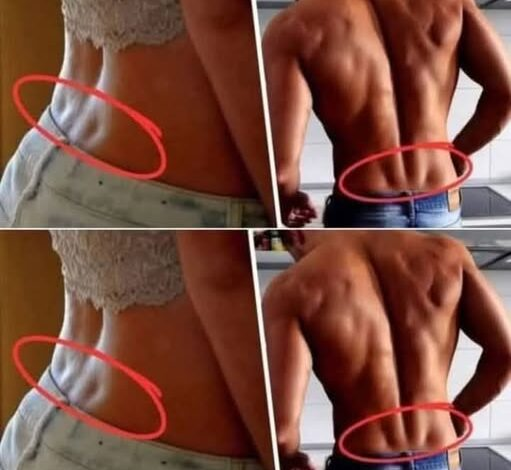
Have you ever noticed two small indentations on your lower back, just above the buttocks? If so, you may have what are commonly known as Venus dimples. These small, symmetrical depressions, often referred to as “dimples of Venus,” have been admired for centuries and are frequently associated with beauty, good health, and physical fitness. Named after Venus, the Roman goddess of love and beauty, these dimples are considered a sign of attractiveness in many cultures

Genetics play the biggest role in whether you have them, though they’re more visible in people with lower body fat or well-defined muscles. Interestingly, men can have similar markings called Apollo holes, named after Apollo, the Roman god of strength. Like Venus dimples, they are considered signs of good health, circulation, and fitness.

Many people find these dimples attractive, and in today’s fitness culture, they’re sometimes viewed as markers of a toned physique. While exercise and diet can make them stand out more, they cannot be created artificially—they’re a natural feature of your anatomy.
Ultimately, whether you have Venus dimples, Apollo holes, or neither, they highlight the uniqueness of the human body and the beauty of individuality.

It’s also important to remember that not having these dimples doesn’t mean someone is unhealthy or less attractive. Everyone’s body is unique, and these dimples are just one of many traits that some people have. Genetics plays a major role in their presence, and they don’t determine your overall health or fitness level. That being said, for those who do have Venus dimples or Apollo holes, they can serve as a natural reminder of their body’s unique structure and genetic makeup. Whether you have them or not, what matters most is embracing your body for its individuality and focusing on maintaining a healthy lifestyle that works for you.
