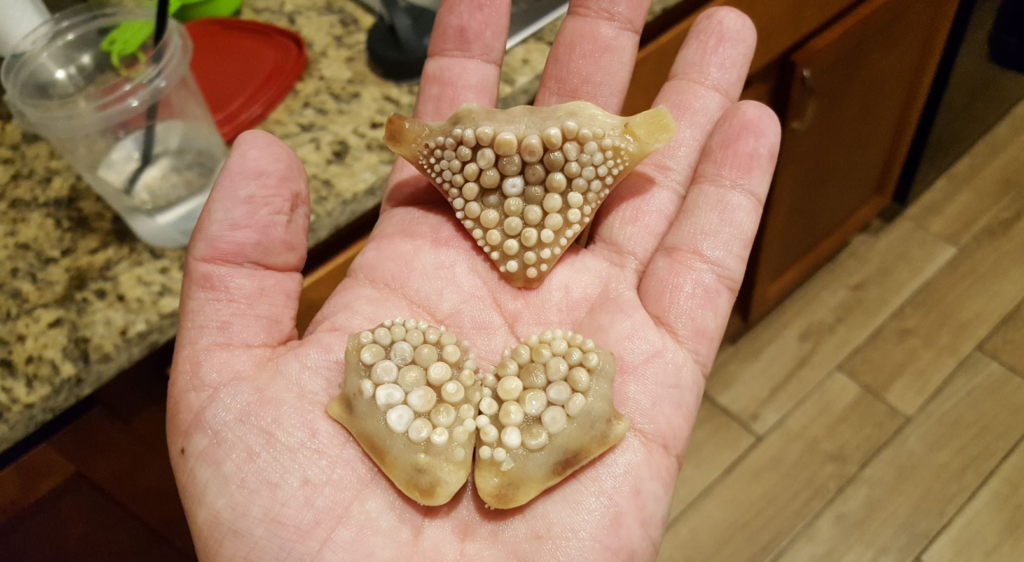
If you’ve ever searched the sand at a beach, you know the thrill of stumbling upon something unusual — a shell, a piece of driftwood, or maybe even something puzzling enough to stop you in your tracks. That’s exactly what happened to a beachcomber in Pensacola, Florida.
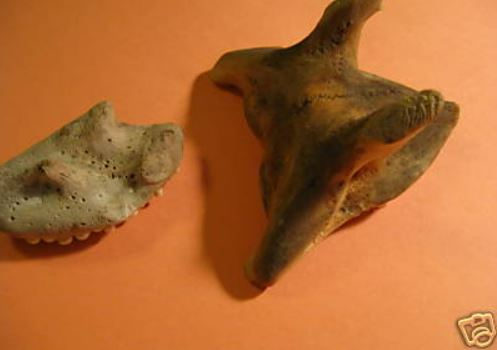
While walking along the shore, they discovered a strange, fossil-like object covered in tiny, tooth-like shapes. For nearly two decades, the mystery baffled everyone who saw it. Marine biologists? Stumped. Museum experts? Also stumped. The answer only came years later: it was the pharyngeal teeth of a freshwater drum fish.
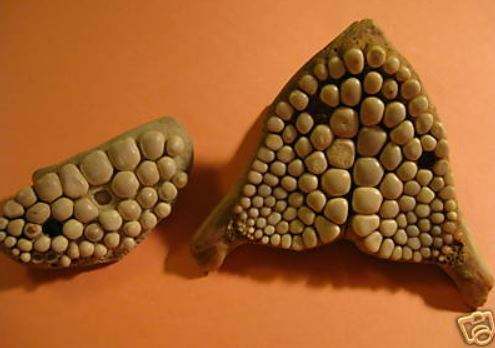
Unlike most fish, which have sharp rows of teeth inside their mouths, freshwater drum use flat grinding teeth hidden in their throats to crush clams, snails, and mussels. These teeth resemble mosaics or fossilized coral, which made the find look ancient and otherworldly.
Though typically found in lakes and rivers, drum fish can survive in brackish water. It’s likely this one’s remains were carried into the Gulf and washed ashore.
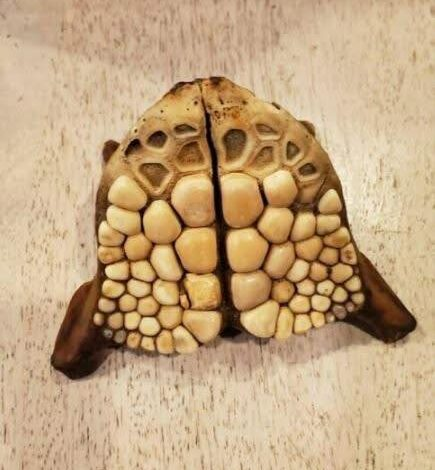
A simple beach walk turned into a decades-long mystery — and a reminder of nature’s strange, brilliant adaptations.
