You might witness some things that chill you to the bone if you dove below the depths of practically any ocean or sea on the planet.
The ocean floor may be a frightening place, with everything from underwater volcanoes and cracks that seem to descend unimaginably deep to fearsome angler fish and other blind monstrosities in the dark.
Research on the Red Sea floor, which is situated between Africa and the Arabian Peninsula and is known for its occasional algae blooms that give it its name, has highlighted that.
On the surface, the Red Sea may be a very busy shipping channel, but scientists have discovered some fascinating secrets hidden far beneath the waves.
In addition to discovering some breathtaking sights, they also made a terrifying discovery after sending probes and divers down into the actual depths.
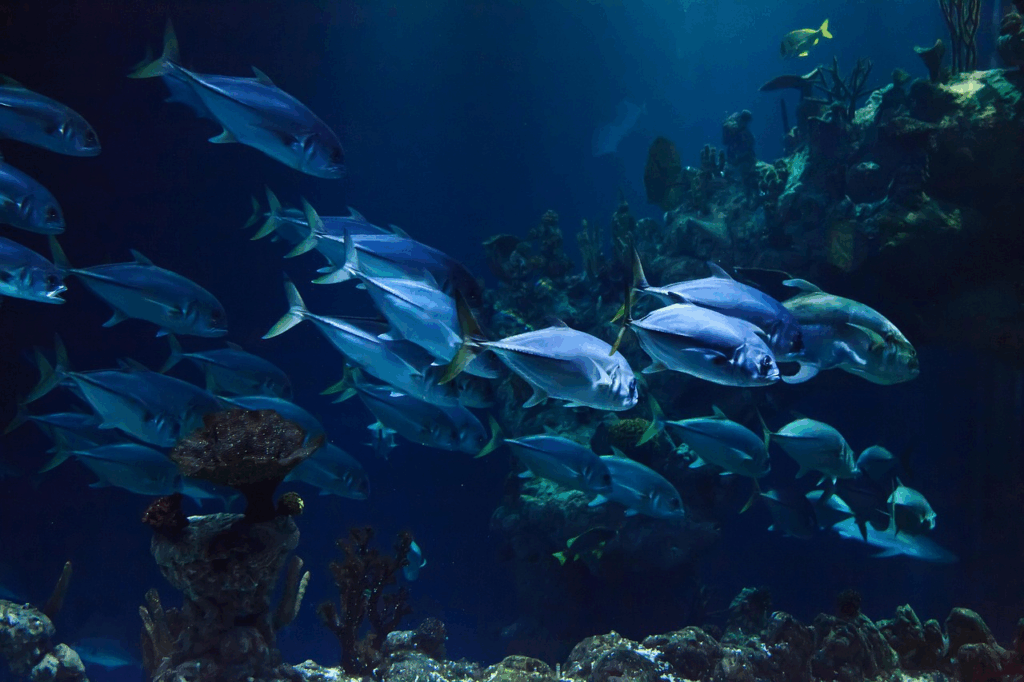
They discovered so-called ‘death pools’ at the sea’s bottom, which extended even further below the surface yet contained no oxygen at all, making it nearly impossible for life to exist there.
Evidently, the few organisms that can survive there become opportunistic predators that prey on shocked animals that happen to walk into the oxygen-free hole.
Don’t worry, the scientists who discovered them were ecstatic. That kind of gloomy emptiness that essentially spells death for anyone that ventures into it seems dreary and depressing.
This is due to the fact that the death holes’ characteristics make them remarkably similar to some of the habitats that were more prevalent on Earth in the distant past.
Sam Purkis, professor and chair of the Department of Marine Geosciences at the University of Miami, said, “Our current understanding is that life originated on Earth in the deep sea, almost certainly in anoxic – without oxygen – conditions. Studying this community hence allows a glimpse into the sort of conditions where life first appeared on our planet, and might guide the search for life on other ‘water worlds’ in our solar system and beyond.”
For us, it’s a classic bit of science: something that should frighten and depress you is actually a fantastic chance to learn about a biome that is quite difficult to locate on Earth.
It all comes down to that lack of life, too – Purkis says that the lack of small animals means things stay pristine in the death pools. “Ordinarily, these animals bioturbate or churn up the seabed, disturbing the sediments that accumulate there. Not so with the brine pools. Here, any sedimentary layers that settle to the bed of the brine pool remain exquisitely intact.”
Therefore, with years of research likely yet to begin, we could potentially learn a great deal more from them.
