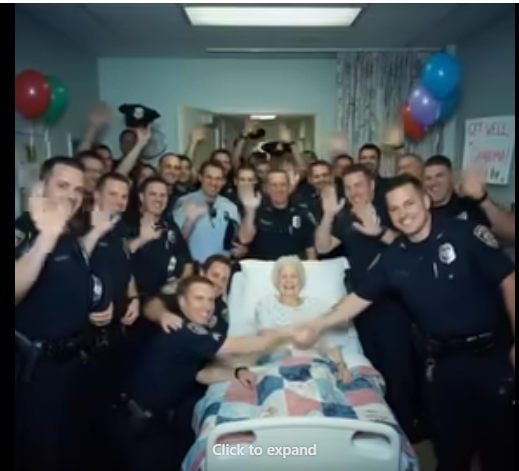
We believed we understood everything about Grandma Esther. At 84, her mind remained razor-sharp, her passion for crossword puzzles unmatched, and her command of Thanksgiving dinner an annual tradition. Yet, a few weeks ago, a sudden fall in her garden landed her in the hospital with a fractured hip.
Our family devised a straightforward plan: rotate visits, supply her with puzzles and jelly beans, and ensure she didn’t overwhelm the nursing staff. But on the third day, we entered her room and stopped in our tracks.
Police officers filled the space.
Not merely a handful. Dozens stood there, dressed in full uniforms, badges gleaming, hats in hand, smiling like children on a holiday morning. Grandma Esther? She presided from her hospital bed like royalty, tossing out quips and waving as if leading a grand procession.
A tall officer, likely a sergeant, gripped my hand warmly. “You must be her grandson. Your grandma’s a legend,” he said.
I wondered if he’d mistaken the room. Then I noticed the poster on the wall: “GET WELL, GRANDMA!” adorned with badge numbers.
Grandma Esther wasn’t just a police officer—she was one of the county’s first female instructors, shaping generations in silence. When burglaries tied to her former recruits emerged, she rose from her bed to guide detectives. Her hidden notebooks solved the case, proving her legacy wasn’t forgotten but still saving lives.
