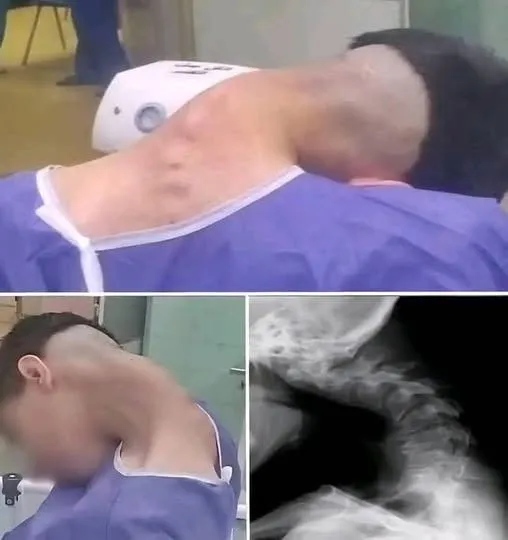
What began as a normal workday turned tragic for an 18-year-old worker in India. In September 2022, a heavy metallic object fell from above, striking his head and knocking him unconscious. Rushed to the hospital, scans revealed a rare and fatal spinal injury: his C5 vertebra had fractured and collapsed backward into the spinal canal, crushing it in a “nutcracker” effect—an extremely unusual, lethal pattern doctors had scarcely seen.

A Desperate Fight for Survival
Despite being placed on ventilator support and having cervical traction applied to relieve pressure on the spinal cord, the young man’s condition worsened. He died just two days after the accident.
Medical teams determined that the severity and location of the damage left no realistic surgical options.
Why This Case Matters to Everyone
This incident wasn’t just a freak accident—it’s a wake-up call for industries, safety officials, and even individuals at home.

Here’s why it matters:
- Even a single heavy object falling from above—from a relatively modest height—can cause catastrophic spinal damage and death.
- The injury didn’t follow any known patterns, exposing a critical gap in medical classification systems used to diagnose and treat spine injuries.
- It highlights how fragile and vulnerable the cervical spine is, particularly between C3 and C7, which support most neck movements.
What Happens When a Vertebra Retropulses
When a vertebral body fractures and moves backward (retropulsion), it can compress the spinal cord severely. This can lead to:
- Immediate paralysis
- Respiratory failure
- Hemodynamic instability (low blood pressure, weak pulse)
- Death if not treated within hours
In this case, despite textbook emergency care, the injury was simply too severe and too rare to be managed successfully.
What We Can Learn — and How to Prevent This
For Workplaces and Employers:
- Always require workers to wear certified safety helmets where overhead hazards exist.
- Never allow workers to stand under suspended materials—even for a second.
- Secure heavy objects using straps, shelves, nets, or brackets to prevent falling.
- Provide regular training on overhead hazard awareness and emergency protocols.
For Emergency Responders and the Public:
- If someone suffers a suspected neck injury, do not move them.
- Stabilize the head and neck if trained to do so.
- Call emergency services immediately.
- Avoid jerking or repositioning the person, as it may worsen spinal cord damage.
