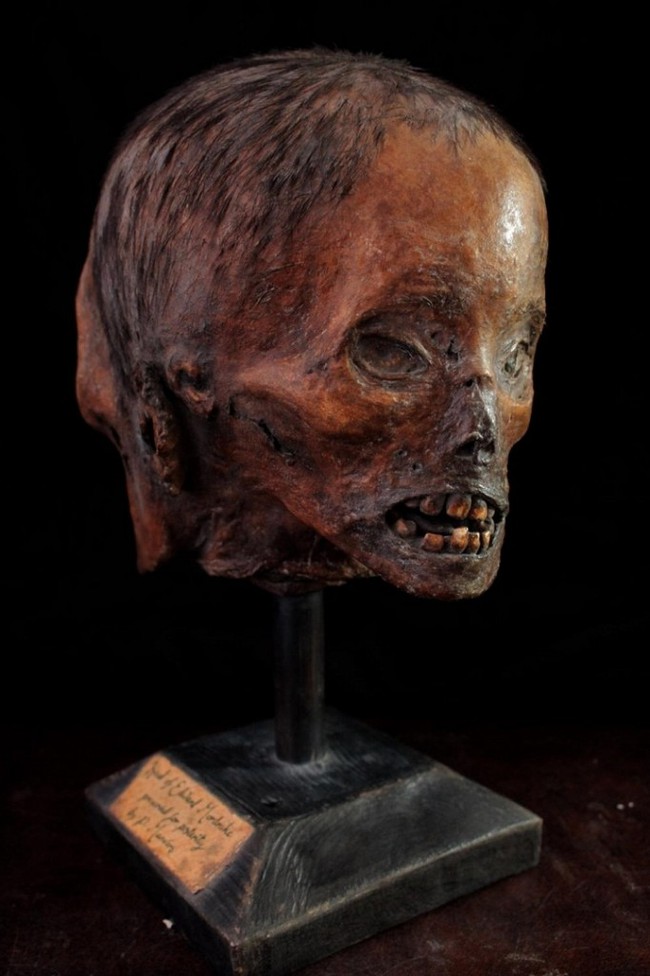
For decades, the tragic story of Edward Mordake has been passed down with a sense of sorrow and fascination.
Edward Mordake was said to be a refined gentleman, born into a powerful and wealthy British family in the 19th century. Yet, he was cursed with an affliction no wealth could cure: a second face on the back of his head. According to the legend, this extra face was that of a woman—beautiful, but “the face of a demon.” It was said to whisper temptations and twisted thoughts to him, driving him toward madness. No doctor, not even his private physicians Manvers and Treadwell, dared attempt surgery to remove it. In the end, Mordake lived in isolation and took his own life at the age of 23.
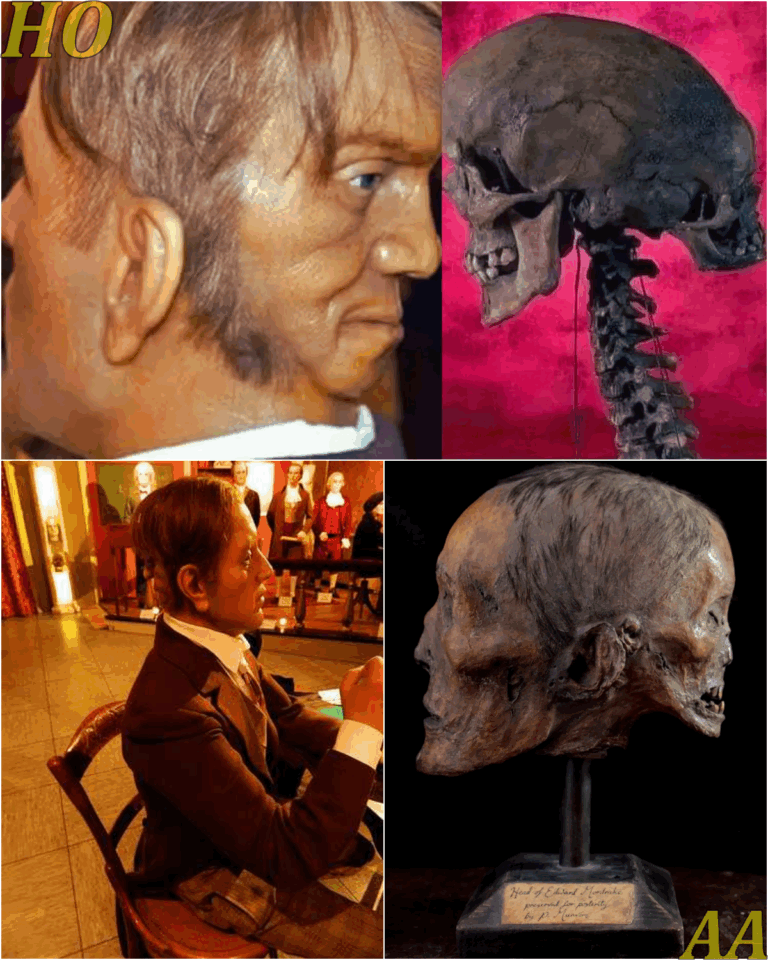
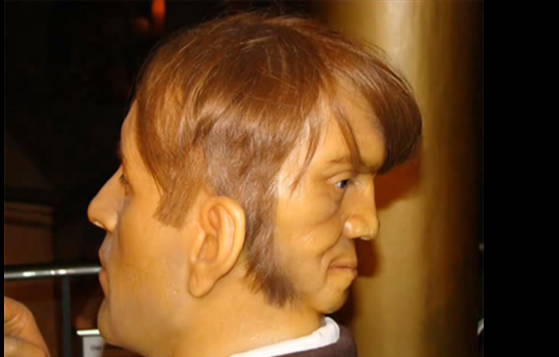
Many people have believed Mordake’s story to be real, while others claim he was a fictional character, invented for dramatic effect. The famous photo associated with his story is, in fact, a 100% fake—created as a museum exhibit.
Today, let’s unravel the truth: Was Edward Mordake real, or just a legend?
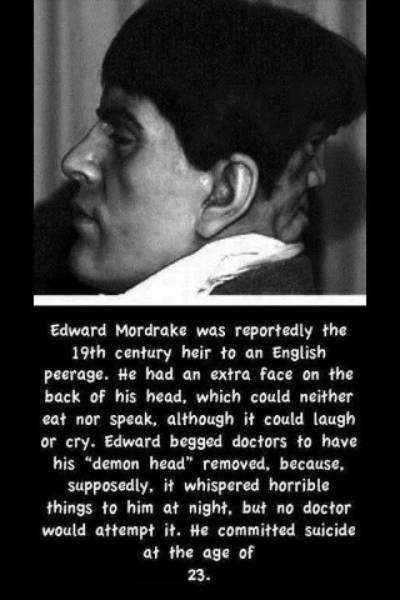
The tale of Mordake originated from the book Anomalies and Curiosities of Medicine, published in October 1896 by American doctors George M. Gould and Walter L. Pyle. The book catalogued bizarre medical cases, including Mordake’s. However, the authors provided no specific source for the story, merely noting it was “from a reliable source,” with no further details.
While Gould and Pyle were respected doctors, it’s likely they simply repeated a story they’d heard elsewhere. In medicine, a condition called diprosopus—craniofacial duplication—does exist, and is an extremely rare form of conjoined twinning. Most individuals with this deformity do not survive long. For example, in 2008, a girl with two faces was born in India, but passed away within six weeks.
However, Mordake’s story doesn’t match medical reality. In cases of conjoined twins, both faces would share the same gender, not one male and one female.
Supporters of the legend argue that details may have changed over time, and that no one could truly know the gender of a strange face on the back of a head. But the contradictions don’t end there. The two doctors said to have treated Mordake—Manvers and Treadwell—do not appear in any medical records outside the story.
Tracing the True Source
Digging deeper, the origin of Mordake’s story can be traced to a poem by Charles Lotin Hildreth, published in 1895—a year before Gould and Pyle’s book. Hildreth’s article described people with bizarre deformities, such as “half-human, half-crab,” “four-eyed man,” and “Norfolk spider-man.” The final tale was that of Edward Mordake.
Hildreth claimed his information came from the “Royal Scientific Society”—but no such organization exists. The only real society is the Royal Society of London, whose archives contain no record of Mordake or any of the other strange cases Hildreth described.
This makes sense, as Hildreth was not only a poet but also a writer of science fiction. Even his poetry explored fantastical worlds. Newspapers at the time were not strictly factual and often published sensational stories without verification, especially if it attracted readers.