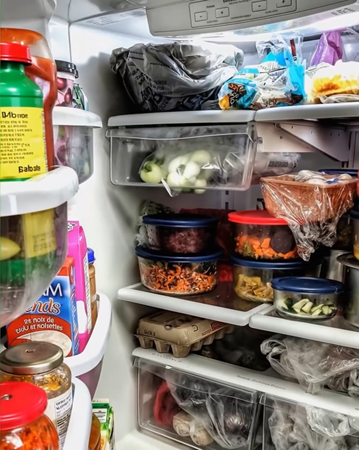
For twenty-five years, Doris expressed love the only way she knew best — through food. Her kitchen was her sanctuary, filled with the smell of slow-cooked stews and freshly baked bread. Every Sunday, her family gathered, laughing as Doris served with quiet pride. Cooking wasn’t just a task — it was her language of love. But over time, she noticed something strange: food disappearing faster than usual.
One rainy evening, she came home early and caught her sister-in-law, Marian, packing containers of food from the fridge. Marian brushed it off — “It’s just food,” she said. But to Doris, it was never just food. It was love, time, and devotion. When she confronted her husband, he dismissed her pain, calling it an overreaction.
That night, something in Doris broke. After years of being unseen, she quietly packed a bag and left. At her daughter’s home, she found peace — cooking again, but this time for joy. Her fridge now stays full, her kitchen warm, her spirit free. On the door hangs a note: “Love should be appreciated, not taken for granted.”
