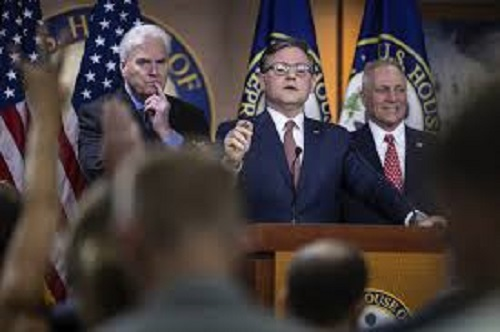
In Washington, efforts to prevent a government shutdown have reached a tense and uncertain stage. What began as routine budget negotiations has escalated into a high-stakes political standoff, with both parties publicly blaming each other for the lack of progress. After several heated exchanges, talks appeared to stall, raising concerns nationwide.
Vice President J.D. Vance warned that a shutdown was becoming “increasingly likely” unless lawmakers could find common ground quickly. House Speaker Mike Johnson argued that Republicans were pushing for “reasonable and responsible” spending limits, while Democratic leaders insisted they had offered workable solutions and accused Republicans of making unrealistic demands.
Behind closed doors, staff from both sides continued searching for a temporary funding measure, but no breakthrough was reported. Outside the Capitol, Americans grew increasingly worried about missed paychecks, closed services, and economic uncertainty. Analysts noted that while shutdown threats are not unusual, the intensity of this dispute underscores deeper disagreements over federal spending priorities.
As the deadline approached, both parties signaled that negotiations were still possible, though time was running out. Whether the government stays open now depends on lawmakers’ willingness to compromise and act in the nation’s best interest.
