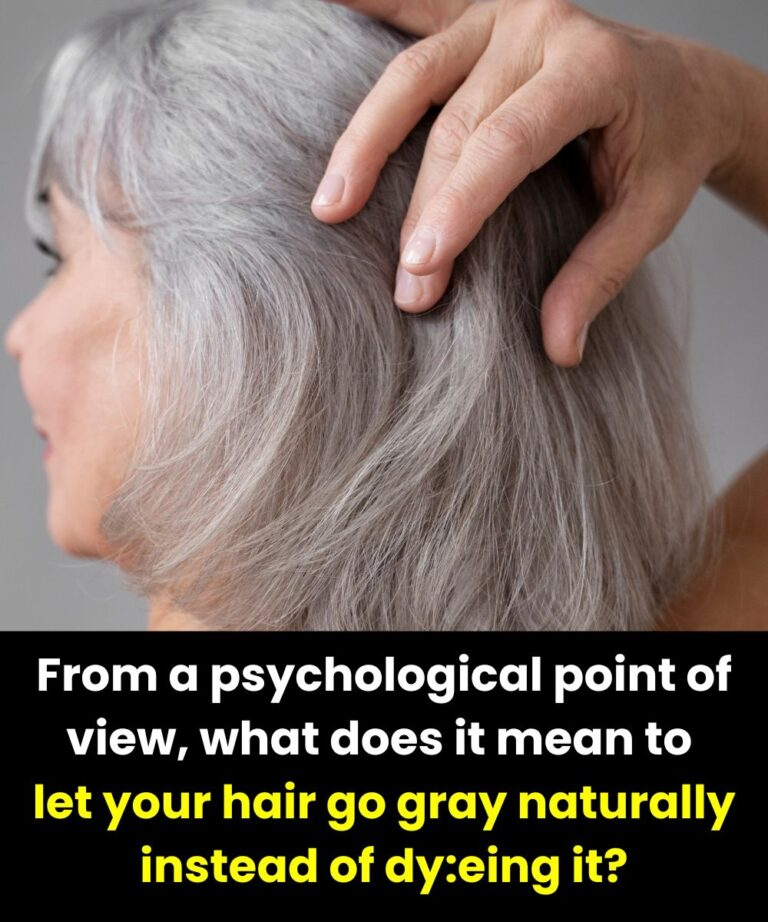
For many people, choosing to stop coloring their hair is a quiet, personal decision. There is no announcement or intention to make a statement—just a choice to let nature take its course. Yet for many adults, especially women over 60, allowing gray hair to grow often triggers unexpected reactions, from awkward comments to subtle changes in how others respond.
This discomfort has little to do with appearance. Instead, it reflects deeper cultural beliefs about aging and control. Modern society strongly promotes the idea that aging should be managed, concealed, or corrected. When someone embraces natural gray hair, they step outside that belief system, reminding others that time cannot be negotiated.
The reaction is intensified by long-standing double standards. Gray hair is often praised as “distinguished” on men, while women face assumptions of decline or neglect. As a result, a woman’s decision to go gray can quietly challenge expectations about femininity and self-worth.
Psychologically, the discomfort often belongs to the observer. Gray hair represents acceptance without apology. In a culture driven by performance and youth, that quiet confidence can feel surprisingly unsettling—yet deeply revealing of our collective anxiety about aging.
