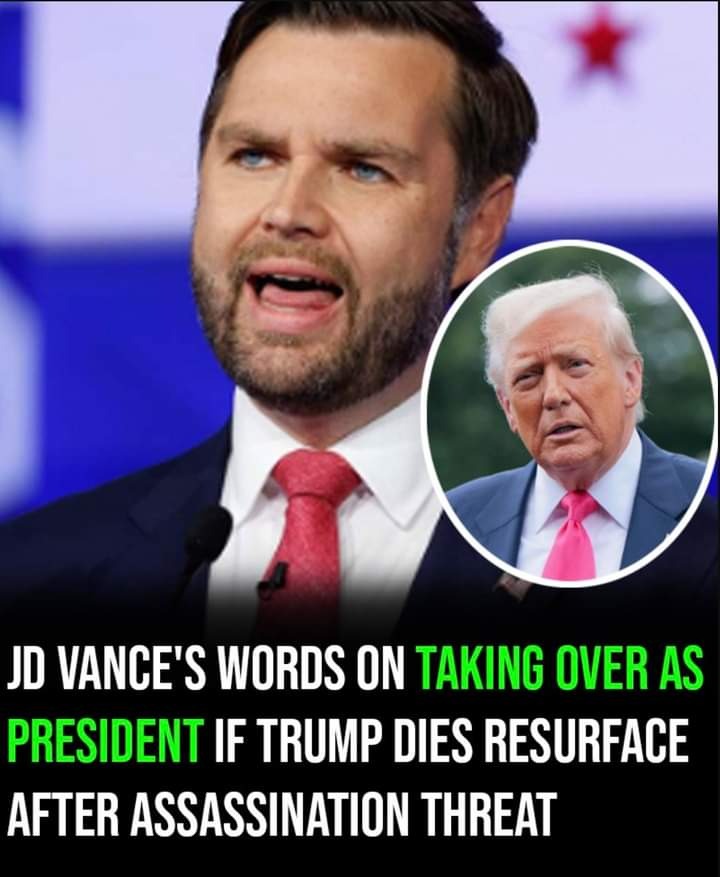
Donald Trump’s recent statements about Iran reveal a troubling blend of personal security and international policy. He has warned that any assassination attempt against him would trigger orders to “obliterate” the Iranian regime. This stance suggests that a single act of political violence could unleash catastrophic military retaliation.The former president’s words imply a world where policy decisions become intertwined with personal survival. Fear and vengeance appear to shape strategic thinking alongside traditional diplomacy and careful planning. The threshold between individual threat and national response has grown dangerously thin.Against this backdrop, JD Vance’s composed acknowledgment of presidential succession carries layered meaning. He calmly states his readiness to assume power should tragedy strike, citing invaluable experience gained at Trump’s side. His words offer reassurance while simultaneously highlighting an uncomfortable reality.The subtext is unmistakable: America is living through a quiet, continuous rehearsal for disaster. Between documented assassination attempts, escalating global conflicts, and pre-written orders of annihilation, the nation treads carefully through uncertain times.Each development reinforces how contingency planning now permeates political discourse. What might once have seemed like speculative fiction has become matter-of-fact discussion among leadership figures.The line between political reality and apocalyptic preparation has never felt so blurred. Ordinary governance now includes casual references to scenarios once confined to emergency protocols and worst-case simulations.This fusion of personal protection with global warfare represents a profound shift in how power speaks about conflict. When leaders frame international relations through the lens of individual survival, the entire concept of measured response gives way to something far more volatile.