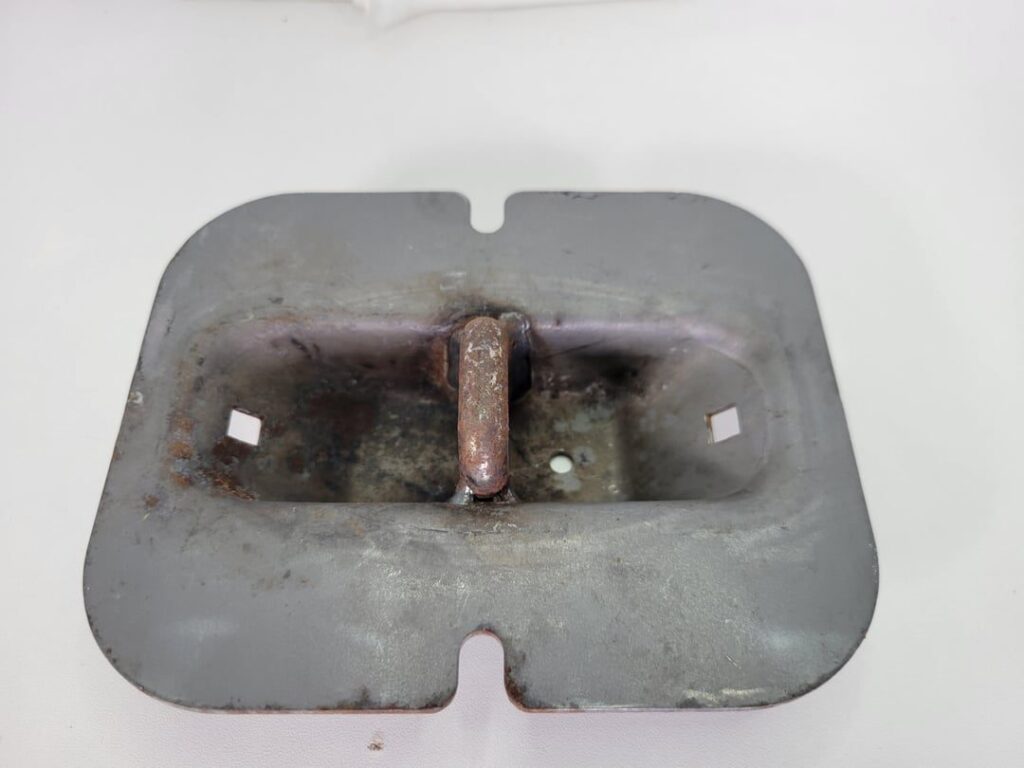
A silver metal piece, weighing 2 pounds, was located in an Ohio garage by a person who worked on motorcycles and semi-trucks.
History
The anchor point for a tie-down on a trailer has a long history rooted in the evolution of transportation and logistics. As trailers became a crucial means of hauling goods, particularly in the post-World War II era, the need to secure cargo effectively became paramount. Early trailers often relied on basic methods, such as ropes and rudimentary hooks, to keep loads in place. However, as the trucking industry expanded and regulations became stricter, more reliable and standardized anchor points were developed. These evolved from simple metal loops to more sophisticated designs, including D-rings, recessed tie-downs, and E-track systems, which allowed for greater flexibility and security in securing various types of cargo.
Usage
Anchor points on trailers serve a vital function in securing loads during transit. They are typically metal fixtures attached to the trailer’s floor, walls, or frame, providing a secure point to which tie-downs like ropes, straps, or chains can be fastened. The usage of these anchor points ensures that cargo remains stationary during transportation, preventing shifts that could lead to damage or accidents. Modern trailers often feature multiple anchor points strategically placed to accommodate different sizes and types of cargo, allowing for versatility in securing everything from small personal items to heavy industrial equipment.
Legacy
The legacy of the tie-down anchor point is evident in its continued importance in the transportation industry. As safety standards have become more stringent, the design and placement of these anchor points have evolved to meet new challenges. The development of stronger materials and more sophisticated designs has made it possible to secure even the heaviest loads with confidence. Moreover, the concept of the tie-down anchor point has expanded beyond trailers to include use in various types of vehicles, from pickup trucks to cargo ships. This innovation has become a standard in transportation, ensuring that goods can be moved safely and efficiently across vast distances.
also read
In essence, the anchor point for a tie-down on a trailer represents a crucial development in the history of transportation, reflecting the industry’s ongoing commitment to safety, reliability, and innovation.
