Understanding Asperger’s Syndrome, AUTISM MISUNDERSTOOD Normally, by which I mean always, I use my real name on these posts. This time I went with Anonymous because it’s a touchy subject that I would rather keep personal. The problem is that most of the people I do tell don’t believe me, hence the reason I am writing this post in the first place. I am a 27-year-old with a form of Autism called Asperger’s Syndrome, and I was only diagnosed less than two years ago. That in itself is unbelievable, but it’s not why I decided to write this post. To my amazement…
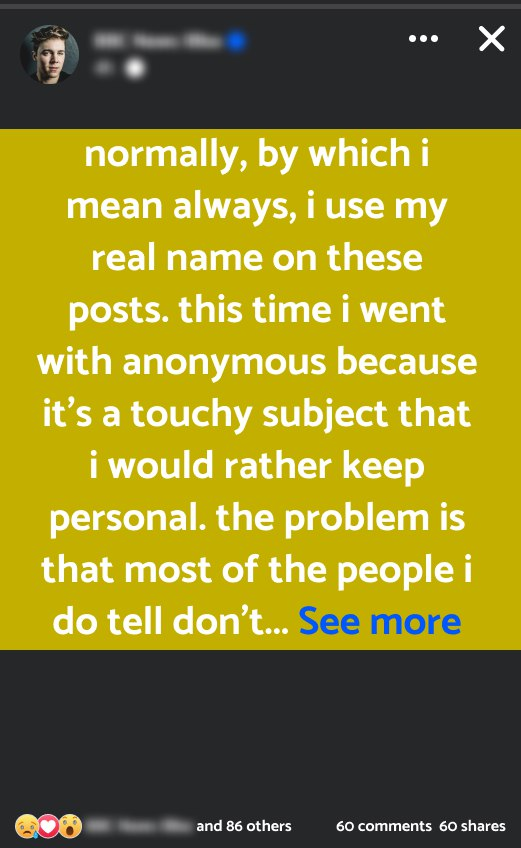
Normally, by which I mean always, I use my real name on these posts. This time I went with Anonymous because it’s a touchy subject that I would rather keep personal. The problem is that most of the people I do tell don’t believe me, hence the reason I am writing this post in the first place. I am a 27-year-old with a form of Autism called Asperger’s Syndrome, and I was only diagnosed less than two years ago. That in itself is unbelievable, but it’s not why I decided to write this post.

To my amazement, most people who know of my diagnosis say they think it’s wrong. Not because they are medical professionals—but because they say I am a good-looking, intelligent man. In other words, people usually associate Autism with being retarded or having a syndrome along the lines of Down or Rett. So, I am writing this to address misconceptions about Autism in general, and Asperger’s in particular (despite the distinction being erased in the new DSM-V). Asperger’s is a neurological condition that leads to an atypical thinking pattern, which involves a unique, third pathway of processing information. It affects one’s ability to understand emotional and subconscious cues, making social interactions challenging.

When I told my friends about my diagnosis, they did not believe me. They thought it was either a wrong diagnosis or that I was confused. They said, “We know you, and you’re not Autistic. You look fine. You’re very smart. You have us as friends—there must be something wrong with this diagnosis!” This reaction is common because Autism is not mental retardation or physical deformity. It’s an objective condition that affects social understanding and interaction. I hope that next time I share my condition, people will understand that Autism does not equate to a physical or mental handicap, but rather a different way of processing social information.
