The Ancient Weaponry of War: The Caltrops
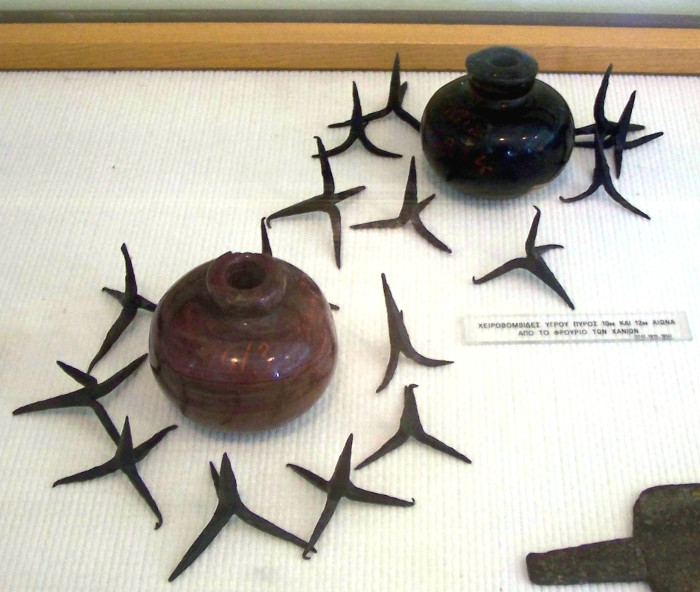
Among the many tools of war that have evolved over the centuries, the caltrop stands out for its simplicity and effectiveness. These small, spiked devices were designed to slow down advancing troops, cavalry, and even vehicles. The image above shows a collection of ancient caltrops alongside ink pots, possibly used to document their deployment or for other related activities.
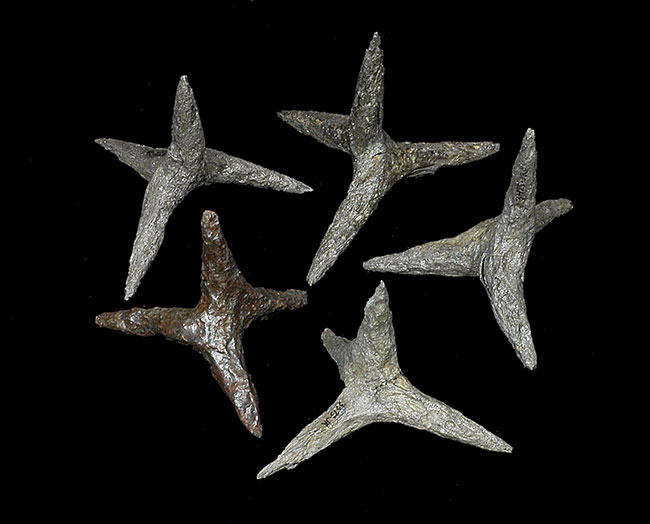
A caltrop is a spiked metal device, typically with four points arranged so that when it is thrown on the ground, one point always faces upwards, no matter how it lands. This design made it an effective weapon to disable or slow down foot soldiers and horses, particularly in large numbers.
Caltrops have been used in various cultures and wars throughout history, dating back to ancient times. The ancient Greeks, Romans, and even Chinese armies deployed caltrops in battle to disrupt the movement of enemy troops. They were particularly effective against horses, as stepping on a caltrop would cause significant injury, rendering the animal incapable of further movement. Additionally, caltrops were used during sieges and defensive tactics to protect fortifications.
The ancient Greeks were among the first to employ caltrops in their military tactics. During the Peloponnesian War, the Spartans were renowned for their formidable hoplite infantry and their devastating charges. To counter this, the Athenians and their allies would scatter caltrops along the Spartan advance, causing chaos and slowing their momentum.
The Roman Empire, known for its military prowess, also made extensive use of caltrops. Roman legions would often use these spiked devices to protect their encampments and fortifications, creating a formidable barrier that could slow or even stop enemy assaults.
Meanwhile, in ancient China, caltrops were also a common sight on the battlefield. Chinese armies would use them to impede the movement of enemy cavalry, a tactic that proved particularly effective against the mounted warriors of rival kingdoms.
Typically, caltrops were made of iron or other durable metals, forged into a shape that ensured at least one spike would always point upwards. The simple yet effective design of caltrops made them easy to produce in large quantities, making them a popular choice for armies and defenders.
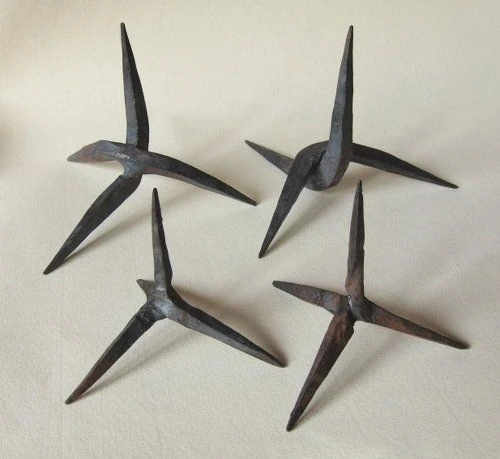
Caltrops were often produced by skilled metalworkers, who would carefully shape the iron or other metal into the distinctive four-pointed design. The precision of the craftsmanship was crucial, as even a slight imbalance could affect the caltrop’s ability to land with a spike facing upwards.
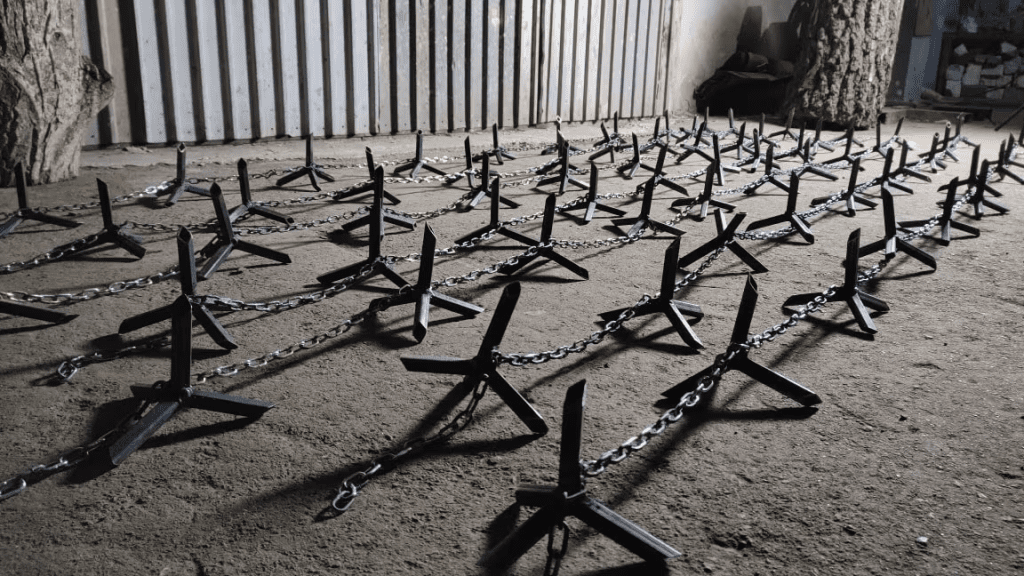
As warfare evolved over the centuries, caltrops also saw adaptations to their design. Some versions were made with sharpened edges, while others incorporated more complex shapes to further impede the movement of enemy forces. This versatility allowed caltrops to remain relevant and effective in a wide range of military conflicts.
The effectiveness of caltrops lay in their ability to slow down and injure advancing forces without the need for direct combat. By scattering these across a battlefield or along a retreat route, armies could create areas of denied access, causing chaos and disruption in the enemy ranks.
The caltrop’s primary function was to disrupt the momentum of enemy forces. By forcing soldiers and cavalry to navigate carefully or risk serious injury, caltrops could effectively slow down the pace of an advance, giving the defending army valuable time to regroup and counterattack.
In addition to their use on the battlefield, caltrops were also employed in defensive situations. Armies would use them to protect their encampments, fortifications, and retreat routes, creating a formidable barrier that could slow or even stop the enemy’s pursuit.
The presence of caltrops on the battlefield also had a profound psychological impact on enemy forces. Soldiers and cavalry, knowing the risk of stepping on these spiked devices, would naturally proceed with greater caution, reducing their overall effectiveness and momentum.
In the provided image, we see a collection of caltrops displayed alongside what appear to be ancient ink pots. The juxtaposition of these objects may suggest their use in the documentation or strategic planning of battles. The caltrops, with their menacing spikes, are a stark reminder of the brutal realities of ancient warfare.
The presence of the ink pots alongside the caltrops in the image may indicate that these spiked devices were carefully documented and planned for in military campaigns. Commanders and strategists likely used detailed records to track the deployment and effectiveness of caltrops in various battles.
The image serves as a powerful reminder of the constant evolution of warfare throughout history. The simple yet ingenious design of the caltrop represents the ongoing quest for tactical advantage, as armies sought new and innovative ways to gain the upper hand on the battlefield.
The caltrop, though simple in design, was a formidable weapon in the arsenal of ancient armies. Its ability to incapacitate and slow down enemy forces made it an invaluable tool in both offensive and defensive strategies. Today, caltrops are remembered as one of the many ingenious methods used by ancient warriors to gain an advantage in the heat of battle.
