I found this in the house I moved into; the bottom block is a type of metal, and the case is a red flocked clamshell.
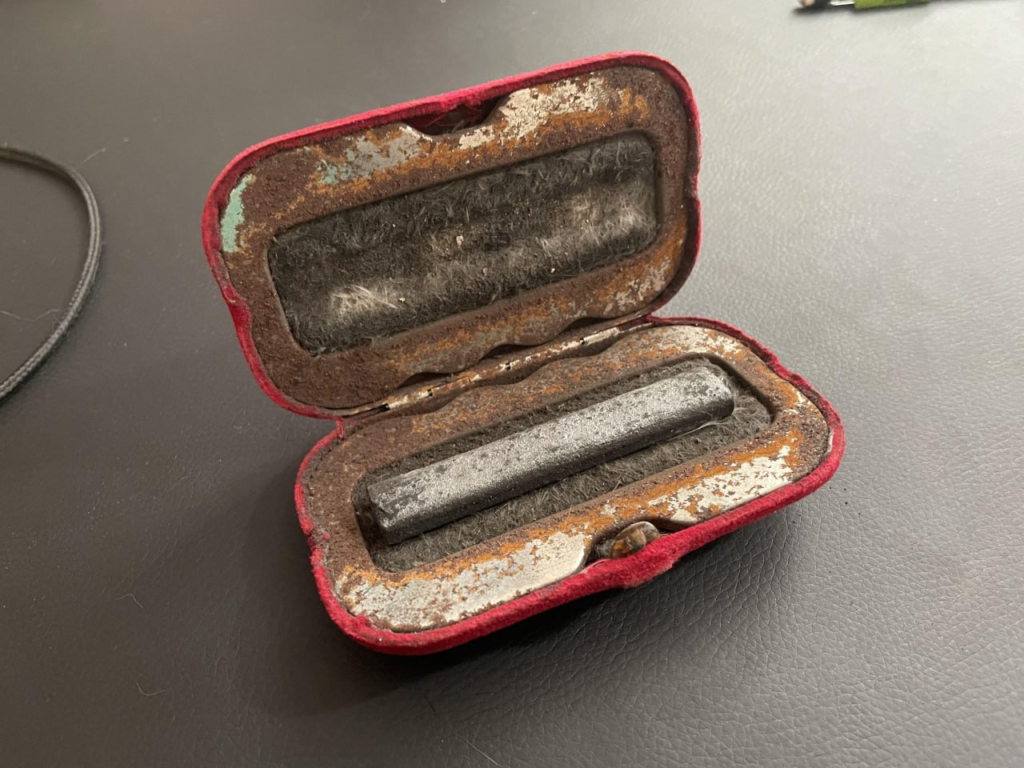
Vintage hand warmers, small devices designed to provide warmth in cold weather, have an intriguing history of practicality and innovation. Originating in 17th-century Japan, where they were called “kairo,” early hand warmers were metal containers filled with charcoal to keep hands warm. In the West, hand warmers became popular in the 19th century, crafted from brass or tin and often fueled by alcohol or other flammable liquids to generate heat. They were common accessories for outdoor activities, travel, and winter commutes.
These hand warmers were designed for extended use, with methods like lighting a wick or activating heating elements to provide warmth. They came in various shapes and sizes, some ornately designed, and were especially useful for people in unheated spaces or traveling by horse-drawn carriage. Today, vintage hand warmers are prized collectibles, offering a glimpse into past ingenuity and a reminder of how people adapted to cold weather before modern technologies like electric warmers took over. Their legacy continues to fascinate collectors and historians, reflecting both practical needs and craftsmanship from bygone eras.
