Here is why pillows become yellow, and you should know what it means.
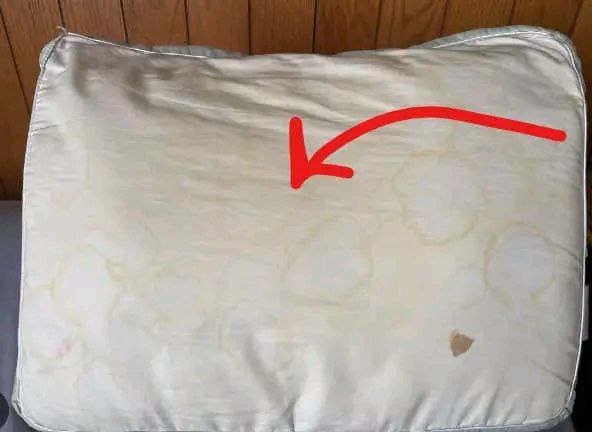
If you’ve been online recently, you might have come across the viral story about a man who introduced his girlfriend to his “Yellow Pillow.” The man, named Cam, admitted to owning a severely discolored pillow, which led to a heated debate on social media. Cam’s post on X (formerly known as Twitter) featured a photo of the pillow, which was stained a deep yellow, along with a caption: “My girlfriend is upset at me after I revealed The Yellow Pillow. Fellas, I know you all understand that this item is magical.”
The post quickly gained traction, with people divided over the situation. While some were disgusted by the sight of the yellowed pillow, others found it surprisingly relatable. Cam, however, remained unapologetic about his attachment to the pillow, even claiming that it grants him the best sleep of his life. “It’s not my fault the pillow is yellow—it just gives me the most peaceful slumber,” he explained. The discussion sparked a mix of reactions, with some users rushing to defend the so-called “magical” Yellow Pillow, while others were baffled by the whole situation.
There are several factors behind the discoloration of pillows, but the main culprit is moisture. The most common and noticeable cause is sweat. Throughout the night, sweat seeps into the pillow, gradually causing it to develop a yellow hue. This process is more common than you might think, as the average person sweats between 200-700 milliliters each night, depending on the temperature and humidity of the room. Over time, this moisture builds up in the pillow’s fibers, leading to the classic yellow tint.
But sweat isn’t the only factor contributing to the discoloration of pillows. Natural oils from your skin and hair can also be a big contributor. These oils are transferred onto the pillow as you sleep, causing it to become stained over time. Additionally, drool and saliva can also leave marks on pillows, further intensifying the yellowing effect.
So, what can be done to keep your pillows from turning into the infamous “Yellow Pillow”? One of the simplest solutions is to wash your pillowcases frequently, . Experts recommend washing your actual pillow every few months to remove the built-up moisture, oils, and bacteria. Depending on the pillow’s material, it can be machine-washed or spot-cleaned. Check the care label for specific instructions.
In conclusion, the viral “Yellow Pillow” debate may be amusing, but it highlights a common household issue that many people face.
