Chicken is a popular meat choice, but some parts come with health risks due to potential parasites and bacteria. Here are four parts to be cautious about:
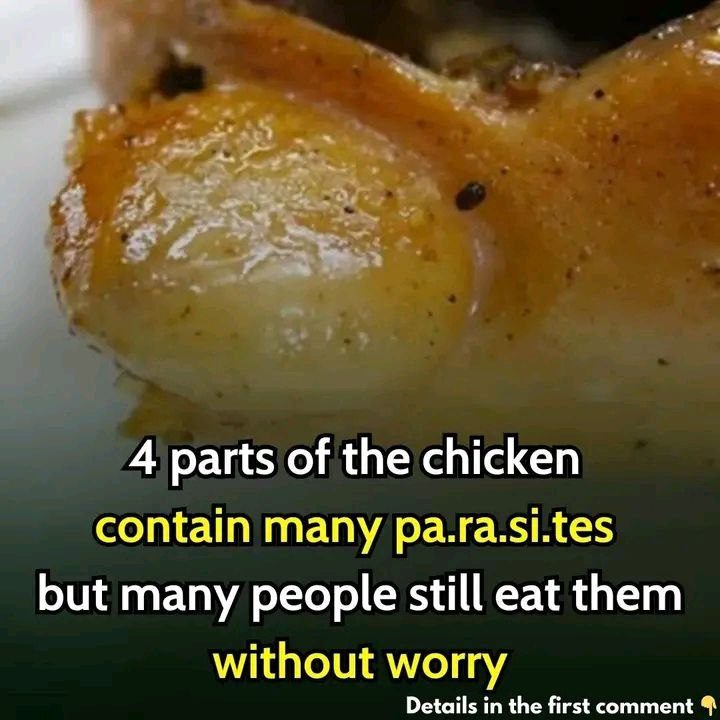
- Chicken Skin: While delicious, chicken skin can trap dirt and pathogens like Campylobacter and Salmonella. Cooking it at high temperatures can reduce risks, but moderation is key due to its high fat content.
- Parson’s Nose (Pygostyle): This fatty tail contains lymphoid tissue, which can harbor harmful microorganisms. Even thorough cooking may not eliminate these risks, making it best to avoid this cut altogether.
- Chicken Lungs: Consumed in some cultures, chicken lungs filter contaminants, making them prone to parasites and toxins. The risks often outweigh any culinary benefits.
- Chicken Head: Eating chicken heads can expose you to heavy metals and toxins stored in the brain. Thorough cleaning and cooking are essential if this part is consumed, especially for children.
- Despite these risks, some people still enjoy these parts due to tradition or flavor. To ensure safety, stick to lean cuts and always cook chicken to an internal temperature of 165°F (75°C). 4o mini
