If a Tendon Raises Up When You Touch Your Pinky to Your Thumb, Here’s What It Could Mean
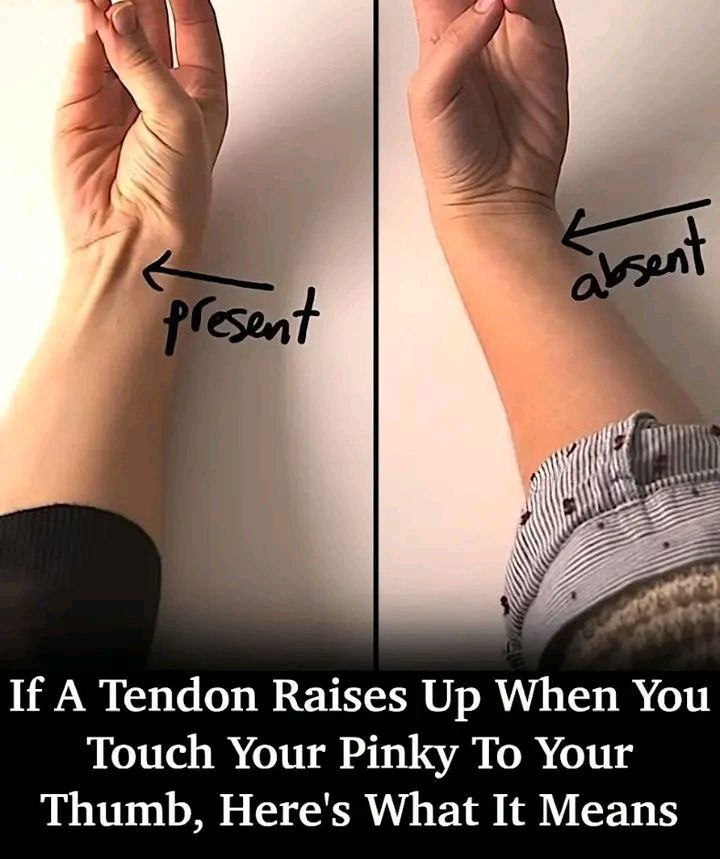
The palmaris longus tendon, a vestigial feature in some human wrists, serves as a fascinating reminder of our evolutionary history. Found in about 90% of people, this tendon connects to a muscle once used by our primate ancestors for swinging through trees. To check for its presence, place your palm up and touch your pinky to your thumb; a raised band indicates the tendon.
This evolutionary trait, along with other features like goosebumps, highlights the remnants of adaptations from our mammalian ancestors. Goosebumps originally helped retain body heat by causing hair to stand up, a function no longer needed in modern humans.
These anatomical quirks illustrate how evolution continues to shape us, even in seemingly insignificant ways. The presence or absence of the palmaris longus is a direct link to our ancestry and ongoing human adaptation, reminding us of the remarkable journey of evolution that connects all living beings.
