The Evolution of Vacuum Cleaners: From Mystery Contraptions to Modern-Day Marvels
One thing we can always be certain of is that things change over time. Nothing can stop this from happening. People change, technology changes, situations change as well. Change is inevitable! Look back at your own life, for example.
The Mystery Contraption
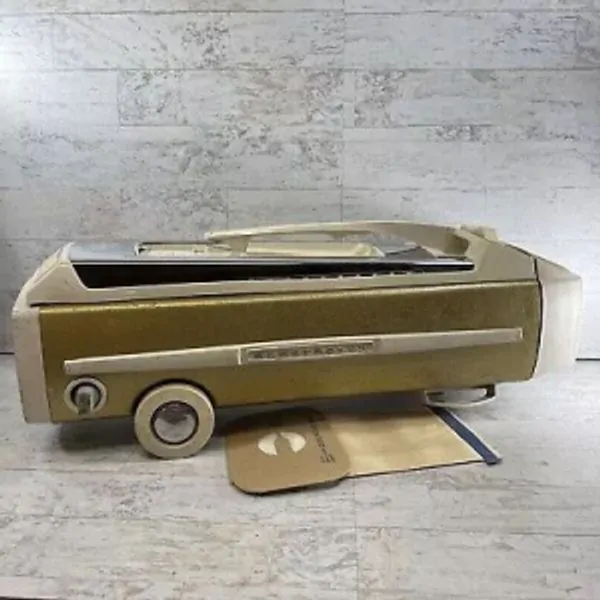
When it comes to advancements in technology, the changes have been astonishing. Looking back, it can be both alarming and refreshing to see just how much has evolved.
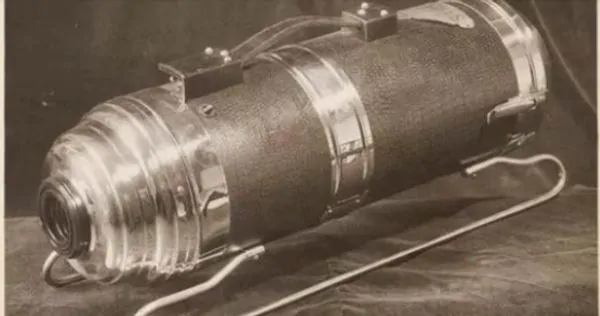
Remember this “thing” from the 1930s? Unless you were around back then, you likely won’t recognize it. Don’t worry, you’re not alone. This odd-looking contraption is a 1930s vacuum cleaner called the Hercules! Quite peculiar, isn’t it? Can you guess how it worked?
The Retro Vacuum Cleaner
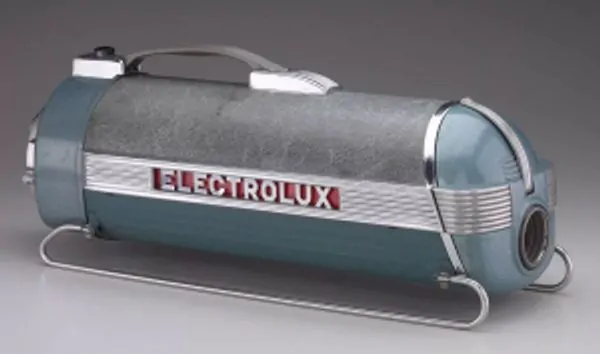
It’s understandable if you didn’t know what this device is. But we bet you’re curious now! This amusing item that resembles a flask or a carrier is actually a 1930s vacuum cleaner, known as the Hercules! This retro vacuum is worlds apart from the modern ones we use today. Right now, I’m watching my Roomba® clean my floor while I type this! Can you imagine how revolutionary a machine like this must have been back then? How exciting and innovative it was for the time? And yet, today, we take for granted how much easier our lives have become thanks to technological progress.
The Hercules vacuum cleaner was considered very stylish and sophisticated back then. The model shown above was covered in crocodile skin, making it a luxury item. It was even more of a status symbol because it was sold during the Great Depression, a time when many families struggled to make ends meet, let alone buy a Hercules. If you recognized this item, try showing it to your kids and see if they can guess what it is! They definitely won’t know!
The Humble Beginnings
Did you know the humble broom wasn’t perfected until 1797? A Massachusetts farmer, seeing his wife struggle to sweep, decided to create one that worked properly. His broom, made from broomcorn, soon became a household staple. Over time, as people sought more convenience, new sweepers and brooms were developed. It wasn’t until the 1860s that Daniel Hess invented the first real vacuum cleaner. According to his patent, “The nature of my invention consists in drawing fine dust and dirt through the machine by means of a draft of air.”
In 1869, Ives McGaffey of Chicago advanced this concept further, though his design ended up being more difficult to use than a regular broom. His patent noted, “The accumulation of dust and dirt in dwelling-houses is a source of great annoyance to all good housekeepers… to obviate these difficulties is the object of my invention.” Unfortunately, his invention did not gain widespread acceptance.
The Revolutionary Hoover
Many designs came and went, but it was James Murray Spangler who revolutionized the vacuum cleaner. A humble janitor aged 60 from Canton, Ohio, Spangler worked tirelessly to perfect his design, even at the expense of his health. His machine stood out because it was not only upright but also portable. The crude device effectively sucked up dirt and deposited it into an attached pillowcase. Spangler patented his invention in 1907 and quit his job to start the Electric Suction Sweeper Company.
“It used a ceiling fan motor and paddle blades to create the air flow… he used a leather belt and journaled it to a rotating brush that he had gotten out of a carpet sweeper… No one was able to get the carpet that clean because they didn’t have a motor-driven brush.”
The Hoover was born when Spangler, facing financial difficulties, sold his company to his cousin, Susan Hoover.
Reflecting on the evolution of vacuum cleaners, we can’t help but marvel at how far we’ve come. Who would have thought that a contraption like the Hercules would eventually lead to the convenience of modern-day vacuum cleaners like the Hoover? It’s truly amazing to see how technology has transformed our lives and made our daily chores so much easier. So the next time you’re using your vacuum cleaner, take a moment to appreciate the history behind it and be grateful for the innovations that have made our lives better.
ALSO READ
