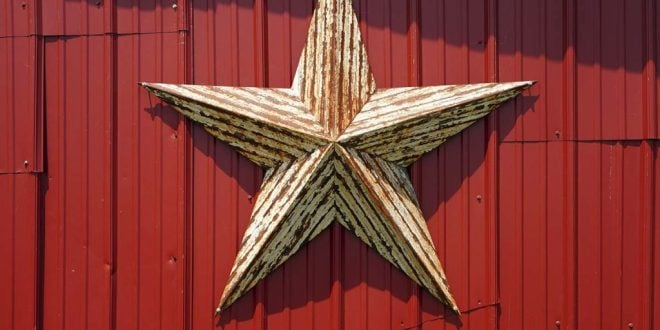
Barn stars are an adorable decoration often seen at the top of a barn, over the door. They can either be painted on or pieces of star-shaped metal. Alternatively, quilt squares or hex signs are sometimes seen in their place. It turns out there’s a reason for these decorations, and it’s likely not what you thought. It turns out that Barn stars are actually very important to German-American farmers. They’re placed up at the top of barns to keep evil away or bring good luck to the farmer’s harvest.
Barn stars, dating back to the 1830s, are a hallmark of Pennsylvania Dutch culture. These decorative symbols, rooted in German folk art, reflect the creativity and traditions of Amish communities. Unlike hex signs, which appeared nearly a century later and were linked to superstitions and good fortune, barn stars were purely ornamental, symbolizing heritage rather than supernatural protection.
Patrick Donmoyer, director of the Pennsylvania German Cultural Heritage Center, highlights how barn stars were initially part of the agricultural lifestyle, misunderstood later by outsiders as mystical symbols. In the 1950s, reimagined designs became a tourist attraction, representing the enduring culture and artistry of Pennsylvania Dutch communities.
Similar symbols appear across cultures, such as the Egyptian Eye of Horus for protection, the Norse Helm of Awe for strength in battle, and the Native American turtle, symbolizing wisdom and longevity. Despite differing origins, these symbols connect humanity through shared beliefs in protection, prosperity, and honoring ancestors.
Barn stars remind us of the hardworking, creative spirit of a community, preserving their legacy while inspiring us today.
