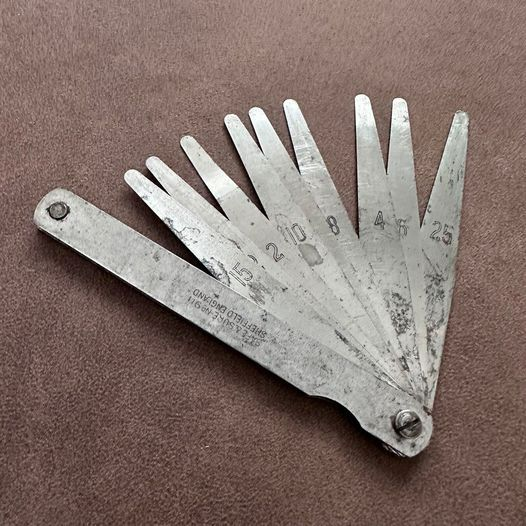
The vintage feeler gauge tool, a staple in mechanical and engineering fields, has a rich history rooted in the industrial age. Developed to measure gaps and clearances with precision, the feeler gauge became an essential tool in machinery maintenance and assembly.
Feeler gauges consist of thin metal blades of varying thickness, calibrated to measure small gaps. Mechanics use them to set spark plug gaps, valve clearances, and measure engine components, ensuring optimal performance. In manufacturing, they help maintain product quality by ensuring proper part fitment, while engineers rely on them for design and maintenance tasks, ensuring accurate assembly and longevity.
The simple, reliable design of the feeler gauge has made it a versatile tool, with its legacy extending to modern precision instruments. Although digital tools are now prevalent, the basic principle of measuring gaps with thin blades remains unchanged, making vintage feeler gauges valuable to collectors and enthusiasts.
These vintage tools are cherished for their craftsmanship and historical significance, offering insights into the evolution of mechanical measurement. Today, they continue to educate and inspire new generations of professionals, underscoring the importance of accuracy and precision in engineering.
