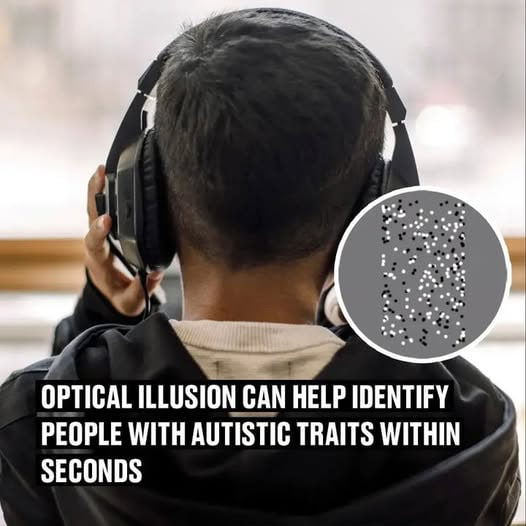
In recent years, researchers have been exploring different avenues to better understand and detect Autism Spectrum Disorder (ASD). One such endeavor involves a novel optical illusion that has the potential to shed light on the cognitive differences associated with ASD. By examining how individuals perceive the motion of black and white dots, scientists hope to gain insights into the detail-oriented thinking style often observed in individuals on the autism spectrum. (1)
Advertisement
Understanding Autism Spectrum Disorder (ASD)
ASD is a neurodevelopmental disorder characterized by deficits in social communication and interaction, as well as restricted and repetitive patterns of behavior, interests, or activities. Common symptoms of ASD can include difficulties with social interaction, restricted interests, repetitive behaviors, sensory sensitivities, and challenges with communication and language skills. (2)
The features of ASD typically appear in the first two years of life, although some children may not be diagnosed with autism until later. The Centers for Disease Control and Prevention (CDC) estimates that about 1 in 36 U.S. children has been diagnosed with ASD as of 2020. There are many traits associated with Autism; however, having some of these traits doesn’t necessarily mean that one has the disorder. Understanding the traits, however, can lead to earlier diagnosis and, therefore, better patient treatment and outcomes.
The Role of Attention to Detail
One distinctive trait noticed in those with ASD is attention to detail and focusing on specific elements rather than the overall context. This cognitive style often leads to a preference for routine, specialization in specific subjects, and heightened sensory perception. Understanding this characteristic in more detail could provide valuable insight into the underlying mechanisms of ASD.
The Optical Illusion and its Implications
