This is an Actual Human Nervous System
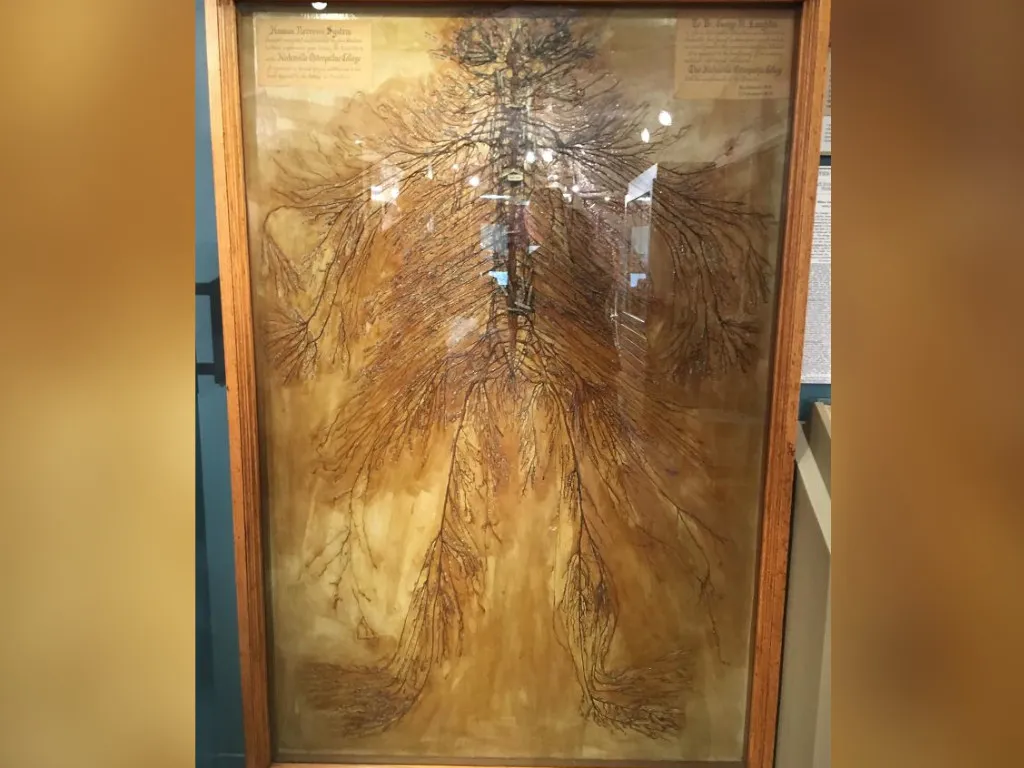
In 1926, two medical students, M.A. Schalck and L.P. Ramsdell from Kirksville, Missouri, embarked on a monumental task that would push the boundaries of medical knowledge and anatomical display. They meticulously dissected and preserved a complete human nervous system, an achievement that remains unparalleled even today. This intricate network, now recognized as a real human nervous system, is not only a testament to their dedication but also a significant contribution to medical science.
The human nervous system, composed of the central nervous system (CNS) and the peripheral nervous system (PNS), is incredibly complex. The CNS includes the brain and spinal cord, serving as the control center for the entire body. The PNS consists of nerves that branch out from the CNS to the rest of the body, transmitting signals that regulate functions such as movement, sensation, and autonomic processes like heart rate and digestion.
The dissection undertaken by Schalck and Ramsdell required extraordinary precision and an in-depth understanding of anatomy. Over 1,500 hours were devoted to this painstaking process. The cadaver’s nervous system was carefully exposed and separated from the surrounding tissues without damaging the delicate nerve fibers. This was no small feat, considering the nerves range from the large and robust sciatic nerve to the microscopic fibers that innervate the skin and organs.
Their achievement was not just a product of sheer effort but also innovation. To preserve the dissected nerves, they had to employ various techniques to prevent decomposition and maintain the structural integrity of the nervous system. The process likely involved using chemical preservatives and delicate handling to ensure that the nerves remained intact and visible.
One of the most remarkable aspects of their work is the educational value it provides. This complete dissection offers an unparalleled opportunity for students and professionals to study the human nervous system in its entirety. Unlike diagrams or partial dissections, this complete nervous system allows for a holistic understanding of how the nerves connect and function together. It serves as a three-dimensional roadmap of human neuroanatomy, illustrating the complex pathways that underpin sensory and motor functions.
The dissection of the human nervous system also highlights the importance of cadaveric studies in medical education. Cadavers have long been considered the gold standard for learning anatomy. They provide a tactile and spatial understanding that cannot be replicated by textbooks or computer models. The work of Schalck and Ramsdell underscores the invaluable insights that can be gained from such studies and the high level of skill required to perform them.
In addition to its educational significance, this dissection has historical importance. It serves as a snapshot of medical practices and knowledge in the early 20th century. At that time, medical students often had to rely on limited resources and had to innovate with the tools and knowledge available to them. The success of Schalck and Ramsdell is a testament to their ingenuity and perseverance.
The dissection also sheds light on the broader context of medical advancements during that era. The early 20th century was a period of rapid progress in medical science, with significant discoveries and improvements in surgical techniques, diagnostic methods, and understanding of human physiology. The work of Schalck and Ramsdell can be seen as part of this larger movement towards a more detailed and accurate understanding of the human body.
Furthermore, this dissection raises intriguing questions about the preservation of anatomical specimens. Over the years, advancements in preservation techniques have allowed for even more detailed and long-lasting anatomical displays. The methods used by Schalck and Ramsdell, although rudimentary by today’s standards, laid the groundwork for future developments in the field. Modern techniques such as plastination, which involves replacing water and fat with plastic, provide incredibly detailed and durable specimens for study.
Another interesting aspect to consider is the ethical dimension of cadaver dissection. Today, there are strict ethical guidelines and regulations surrounding the use of cadavers in medical education and research. Consent from donors or their families is mandatory, and the handling of human remains is done with great respect and care. The work of Schalck and Ramsdell predates many of these regulations, and it is a reminder of how far the field has come in terms of ethical considerations.
The achievement of Schalck and Ramsdell is not only a milestone in the history of medical education but also a source of inspiration for future generations of medical students and professionals. It exemplifies the dedication, precision, and passion required to advance our understanding of the human body. Their work continues to be a valuable resource for those studying neuroanatomy and serves as a powerful reminder of the intricate and fascinating nature of the human nervous system.
ALSO READ
In conclusion, the dissection of a complete human nervous system by M.A. Schalck and L.P. Ramsdell in 1926 remains a landmark accomplishment in the field of medical science. This intricate network provides invaluable insights into the complexity of human neuroanatomy and serves as an educational tool that continues to benefit students and professionals alike. Their dedication and skill have left an enduring legacy that highlights the importance of meticulous anatomical study and the rich history of medical advancements.
