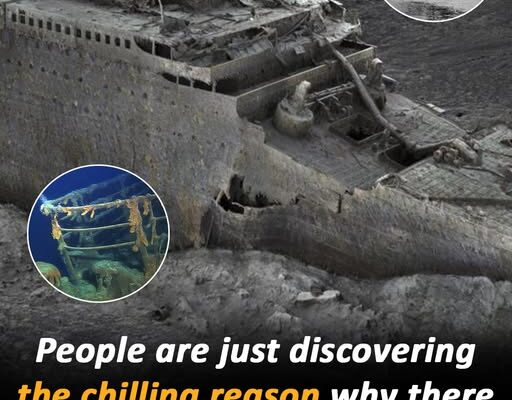
The RMS Titanic’s tragic sinking on April 15, 1912, continues to captivate the world. On its maiden voyage from Southampton to New York, the “unsinkable” ship struck an iceberg, leading to over 1,500 deaths.
Decades later, the Titanic’s wreckage was discovered on September 1, 1985, more than 12,000 feet beneath the Atlantic Ocean. Deep-sea explorer Robert Ballard used a debris-following method to pinpoint its location. The wreck, split in two, revealed a vast debris field—but few human remains.
Despite clothing and personal items scattered around, bodies were notably absent. At such depths, bacteria and sea creatures consumed soft tissue, while the bones dissolved due to the calcium carbonate under-saturation in the deep ocean.
“We’ve seen shoes, which suggest a body was once there, but no remains,” Titanic director James Cameron said.
The eerie reality of the Titanic’s missing bodies highlights the power of nature. As the ship continues to decay, scientists predict its structure may collapse entirely within 50 years. The tragedy serves as a sobering reminder of the ocean’s immense, unforgiving force.
