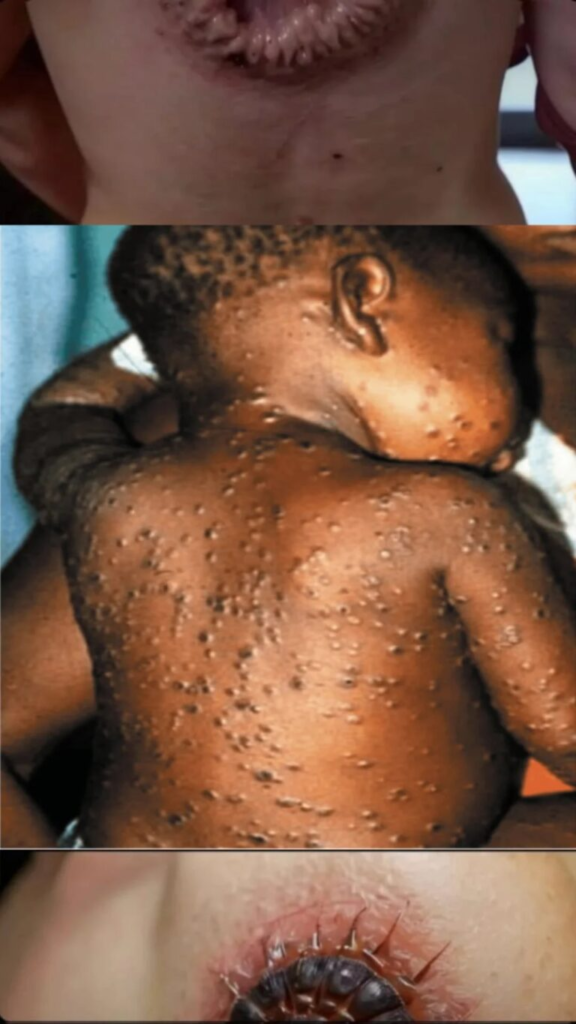
Background: Monkeypox is a poxviridae virus closely related to smallpox (variola). It was first described in humans in 1970 and has since become endemic in parts of Africa. In recent weeks, clusters of cases have been described in several countries prompting us to revisit this topic as it is not one we typically deal with in the ED.
The Monkeypox virus belongs to the Poxviridae family, specifically the Orthopoxvirus genus. This brick-shaped virus has a lipoprotein envelope and a linear double-stranded DNA genome. It is genetically distinct from other viruses in the Poxviridae family, such as variola, vaccinia, and cowpox. There are two clades of Monkeypox: the West African clade, with a low case fatality rate of <1%, and the Central African clade, which is more lethal, with a case fatality rate of up to 11%, particularly in unvaccinated children.
Monkeypox was first identified in monkeys in 1958, with the first human case reported in 1970. It is endemic in certain parts of Africa, with sporadic cases outside Africa linked to travelers. The virus spreads primarily through large respiratory droplets and direct contact with bodily fluids. The typical incubation period is 10-14 days, with fever, malaise, and lymphadenopathy preceding the rash. The rash starts as maculopapular lesions and progresses to vesicular and pustular stages. While the disease is generally mild, it can be severe in children and immunocompromised individuals.
ALSO READ…
