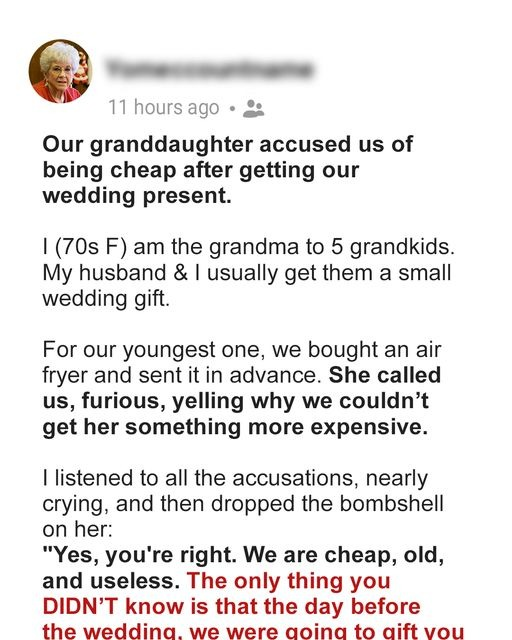
Jen and her husband, in their 70s, cherished their five grandchildren. It was their tradition to buy the cheapest item from the wedding registry and gift the couple $40,000—always a secret.
When their youngest granddaughter, Eloise, married, they followed tradition. But when Jen called to check in, Eloise scoffed. “An air fryer? That’s the cheapest thing on my list! I can’t believe how cheap you are,” she snapped.
Jen, taken aback, explained it was useful, but Eloise doubled down. “Everyone knows you have money. It’s embarrassing.”
Jen finally revealed the truth. “We had planned to gift you $40,000.”
Eloise accused them of not loving her, then hung up. Later, learning her cousins received the money, she called, pleading, “Why didn’t I get anything?”
“We felt your reaction wasn’t right,” Jen replied.
Eloise insisted she was stressed. “Can’t we forget this happened? I need that money.”
Threatening to skip Christmas, Eloise claimed exclusion, but Jen stood firm. “We love you, but actions have consequences.”
Their decision sparked debate—was Jen right, or too harsh? What do you think?
