
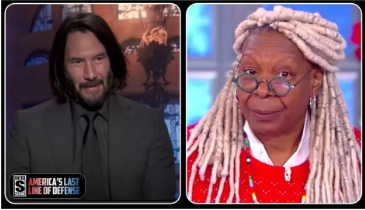
In the whirlwind world of social media, it’s easy for stories to catch fire, especially when they involve beloved celebrities like Keanu Reeves and Whoopi Goldberg. Recently, a sensational claim has been making the rounds, suggesting that Reeves refused to present a Lifetime Achievement Award to Goldberg, allegedly stating, “She’s not a good person.” Let’s dive deep into this narrative and separate fact from fiction.

Origins of the Claim
The story first appeared on a website known as the Dunning-Kruger Times, which published an article titled “Keanu Reeves Refuses to Present Whoopi Goldberg’s Lifetime Achievement Award: ‘She’s Not a Good Person.’” This piece portrayed Reeves as declining the role of presenter due to personal disagreements with Goldberg. However, it’s crucial to note that the Dunning-Kruger Times is a satirical website. Their “About Us” page explicitly states that all content is fictional and intended for entertainment purposes.
Video: Keanu Reeves Refuses to Present Whoopi Goldberg’s Lifetime Achievement Award She’s Not a Good Person
Spread on Social Media
Despite its satirical origins, the article gained traction on various social media platforms. Users on Facebook, X (formerly Twitter), and other networks shared the headline without context, leading many to believe it was a factual news report. Comments ranged from support for Reeves to criticism of Goldberg, highlighting how quickly misinformation can influence public opinion.
Fact-Checking the Narrative
Reputable fact-checking organizations, including Reuters and Snopes, have investigated this claim. Their findings confirm that the story is entirely fictional, originating from a satirical source. There is no evidence to suggest that Keanu Reeves made any such statements about Whoopi Goldberg or refused to present her with an award.
The Role of Satirical Websites
Satirical websites like the Dunning-Kruger Times create fictional stories for comedic or critical purposes. While their content is meant to entertain, it can sometimes be mistaken for genuine news, especially when shared out of context. This incident underscores the importance of critically evaluating online content and verifying sources before accepting information as truth.
