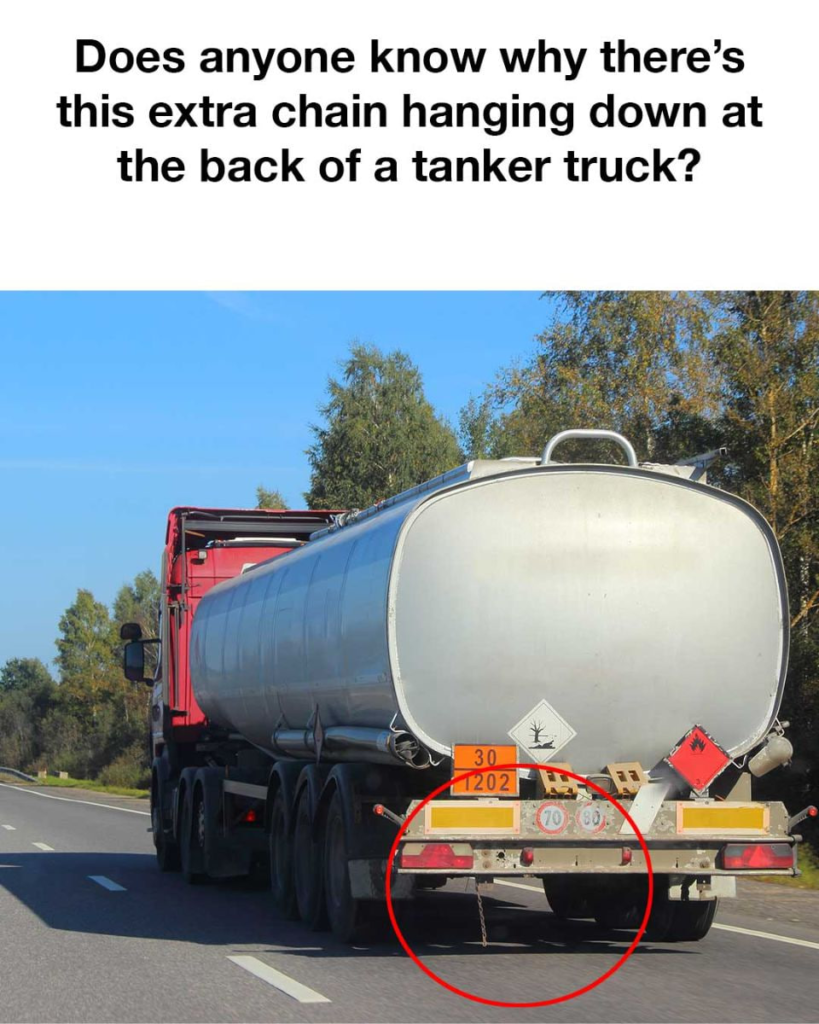
Tanker trucks are designed to transport liquids and gases, including fuel, chemicals, and water. One notable feature is the chain hanging from the back of these trucks. While it may seem unnecessary, this chain plays a critical role in safety.
The purpose of the extra chain is to dissipate static electricity. As fuel moves inside the tanker, friction builds up static charges, which can cause dangerous sparks near flammable vapors. These sparks can lead to fires or explosions if not properly managed. The grounding chain drags on the ground, providing a safe path for static electricity to discharge into the earth, preventing ignition.
Grounding chains became standard after fuel transport accidents were linked to static discharge. Today, regulations from agencies like OSHA and DOT mandate grounding measures, and trucks must be equipped with grounding chains or other static discharge systems. Despite newer technologies, grounding chains remain reliable, cost-effective, and essential for preventing catastrophic accidents.
This simple safety feature continues to protect drivers and the public by reducing the risk of fire or explosion during fuel transport.
