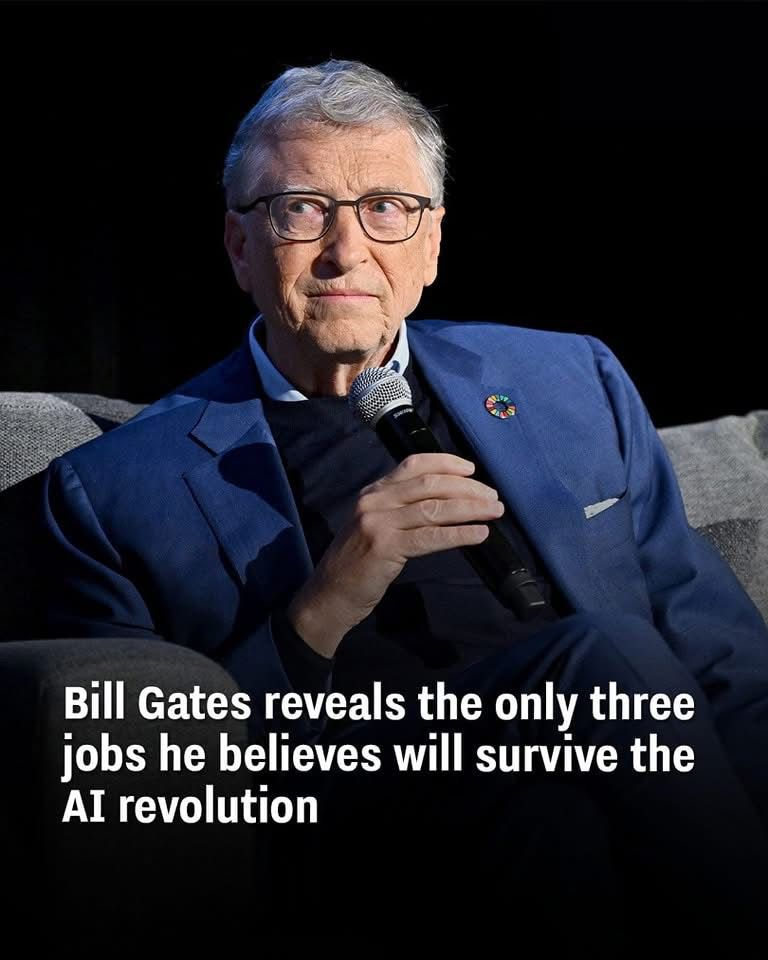
Bill Gates, a visionary on all things tech, has weighed in on this brave new world. He predicts that, by 2030, AI will replace a significant chunk of jobs—some sooner than others. While the rise of robots and machines may seem intimidating, Gates believes there are certain jobs that will stand the test of time.
So, which jobs should you be worried about, and which ones are safe from the robotic takeover? Let’s break it down! Here’s a closer look at the jobs at risk—and the three key roles that Gates says AI can’t replace. Spoiler alert: they’re not what you’d expect!
Self-driving cars and trucks are becoming a reality. These autonomous vehicles will drive themselves, significantly reducing the need for human drivers. Although this transition won’t happen overnight, AI’s progress in transportation continues to accelerate. Fewer people will need to drive taxis and trucks in the future. As a result, driving jobs will get replaced by autonomous vehicles.
Retail Cashier Jobs

Self-checkout systems and automated kiosks are replacing traditional cashiers in many stores. AI-powered tools now scan items, process payments, and issue receipts with speed and precision. Machines are more cost-effective than human cashiers, making them the preferred choice for retailers. As customers become more familiar with automation, cashier jobs will continue to decline and retailers will rely increasingly on these technologies for smoother operations.
Bookkeeping Clerks

AI already performs many bookkeeping tasks with high precision. Machines track finances, reconcile accounts, and process invoices faster than humans. These systems can also generate financial reports and identify trends in the data. As automation improves, fewer people will perform manual bookkeeping tasks. Therefore, AI will replace human clerks for most of these routine tasks.
Receptionist Jobs

Virtual assistants are replacing human receptionists in many businesses and offices these days. AI is capable of answers=ing calls, scheduling appointments, and managing emails with increasing accuracy. Voice recognition technology has also improved, making these systems more effective at interacting with people. Consequently, businesses will adopt AI for administrative tasks. As a result, traditional receptionist roles will shrink.
Data Entry Clerks

AI excels at repetitive data entry tasks. Machines can process and enter data quickly and accurately with little human involvement. AI ia also able to analyzes large amounts of data efficiently, improving accuracy and speed. As a result, companies will rely more on AI to handle data entry and eventually human data entry clerks will see their jobs replaced by automation.
Customer Service Representatives

AI-driven chatbots are taking over many customer service roles. These systems are capable of responding to customer questions, resolving issues, and providing assistance without human input. As AI improves, businesses will increasingly turn to automation for customer service. This shift will eventually reduce the demand for human customer service representatives. AI’s ability to offer faster, more consistent service will make it the preferred solution for most businesses.
Fast Food Workers

Fast food chains use AI to improve service speed and efficiency. Machines take orders, cook meals, and serve customers without the need for human workers. Self-ordering kiosks and automated cooking tools make human employees unnecessary. These systems work continuously without breaks, boosting efficiency. As automation increases, the demand for fast food workers will continue to decrease.
Insurance Underwriters

AI revolutionizes the insurance industry by automating routine tasks. Machines assess risks, process claims, and make decisions faster than humans. AI analyzes vast amounts of data to predict outcomes and set policy terms. As a result, the demand for human underwriters will decline. Human input will remain necessary for complex cases, but most underwriting jobs will be automated.
Factory Workers

Robots replace many manual labor tasks in factories. AI-powered machines assemble products, package them, and perform quality control tasks more efficiently than humans. These machines work continuously without breaks and make fewer errors, and as automation technology improves, fewer human workers will be needed in factories. Factory work will increasingly shift to AI-powered machines with time.
