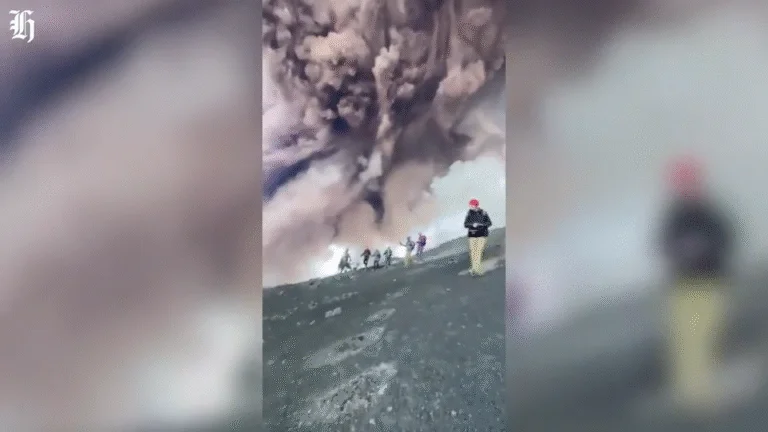
Tourists were forced to flee Mt Etna as the volcano erupted, sending a giant plume of ash more than 6500m high.
Video footage showed tour groups rushing away from the eruption of the volcano in Sicily – one of the most active in Europe.
Other images showed tourists calmly photographing the spectacle despite being just a few hundred metres away.
In the nearby city of Catania, beneath the flanks of the volcano, crowds of people enjoyed the sunshine and went about their business as clouds of ash billowed into the sky.
Monday is a public holiday in Italy, and the vast majority of people are not at work. Despite the huge quantities of ash emerging from the volcano, authorities said there was no current danger to the population.
The eruption was so powerful that it led to the collapse of part of a crater.
According to the National Institute of Geophysics and Volcanology, surveillance cameras showed “a pyroclastic flow, probably produced by a collapse of material from the northern flank of the south-east crater”.
A pyroclastic flow occurs when volcanic rock, ash and hot gases surge from volcanoes.
The explosive activity “had transitioned to a lava fountain”, the institute said, with the plume of ash expected to dissipate towards the south-west.
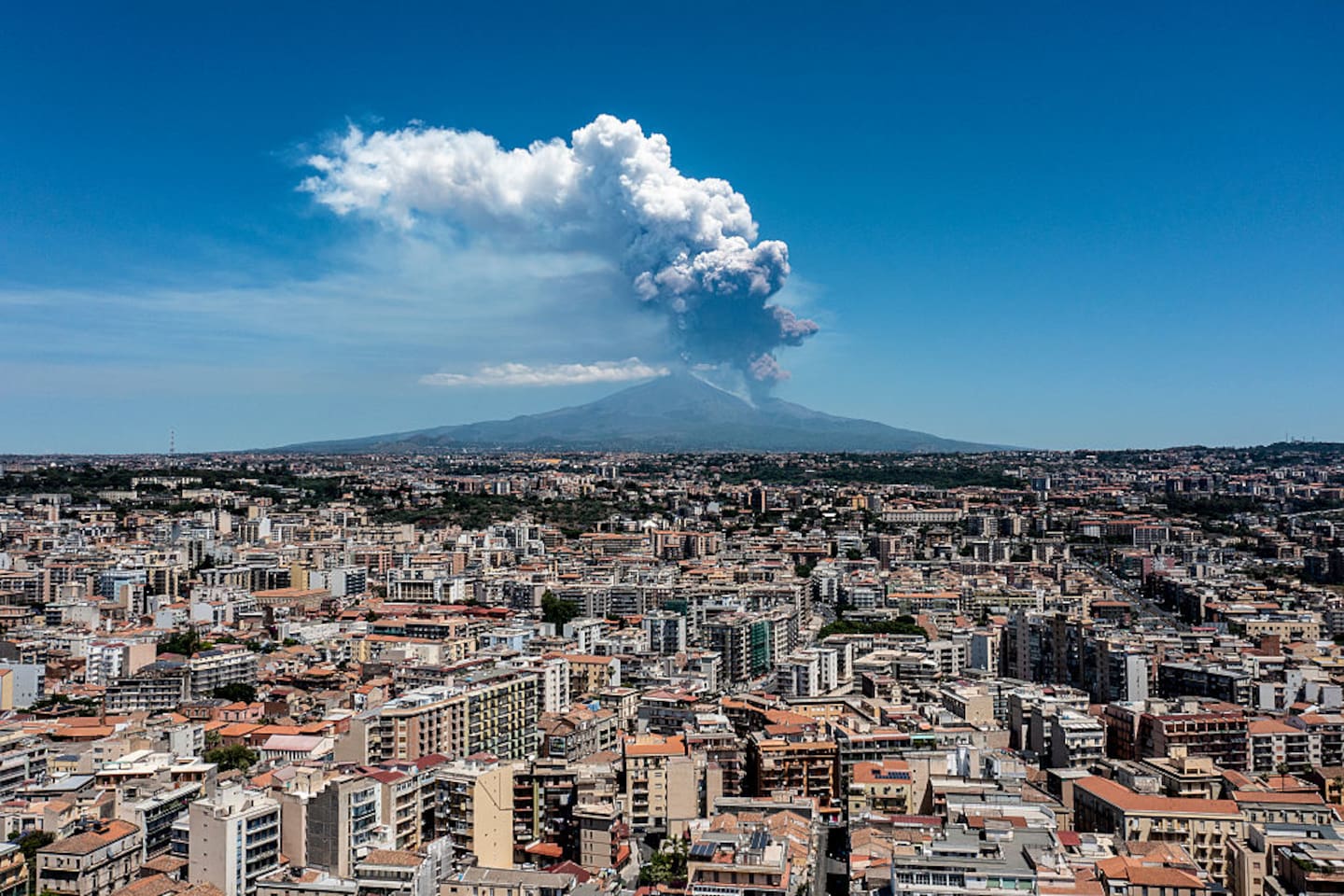
Sicily’s regional head, Renato Schifani, confirmed no population risk despite Mt Etna’s southeast crater collapse, which released a massive ash cloud and pyroclastic flow. Authorities urge tourists to avoid the area amid potential dangers. Catania airport remains open, though recent eruptions have caused past injuries, flight disruptions, and reckless tourist behavior.
