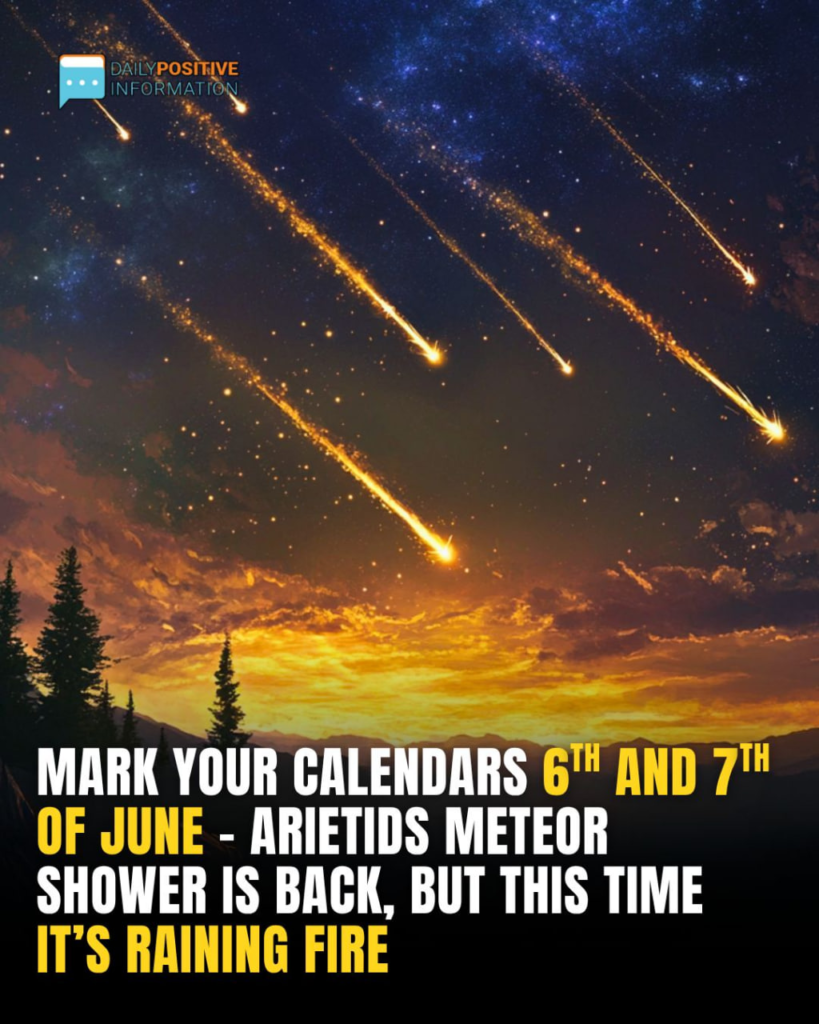
Most meteor showers are easy to view—find a dark sky and look up. But what about daytime meteor showers? The Arietids, believed to be the most active daytime meteor shower, peak the morning of June 7, 2025. You might catch a few meteors during the dark hour just before dawn.
Active from May 29 to June 17, the Arietids radiate from the Aries constellation, rising in the east before sunrise. Although the radiant is only 30 degrees from the sun—making visibility difficult—the shower’s zenithal hourly rate is impressive: up to 200 meteors per hour, as measured by radar.
Optimal viewing occurs just before astronomical twilight, when the sky is still dark. Look eastward, and you may spot a few streaking meteors.
First discovered in 1947 via radar by Jodrell Bank Observatory, the Arietids are thought to originate from Comet 96P/Machholz, part of the broader Machholz Complex, which includes multiple comets and meteor showers.
Want to track them in real time? Visit NASA’s Meteor Shower Portal to explore activity—including what can’t be seen with the naked eye.
Don’t miss this rare, radiant dawn show.
