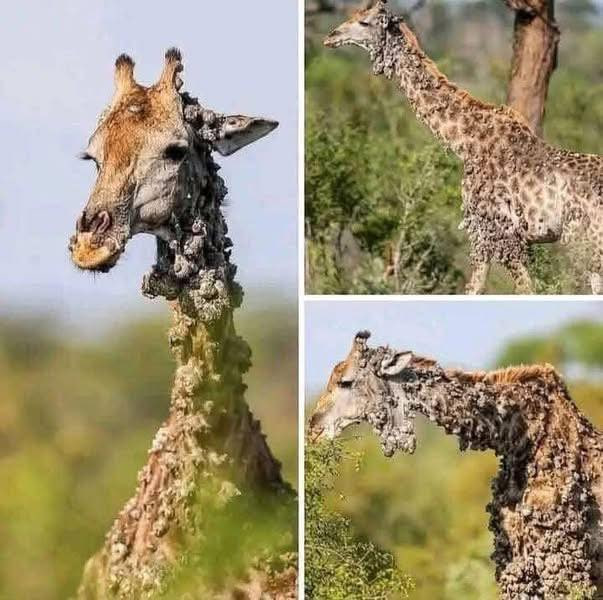
Wildlife photographer Lucas Brandt traveled to Kenya’s Laikipia Plateau hoping to capture something rare—perhaps a lion pride or the elusive black panther. What he found instead was far more haunting: a lone, pale giraffe that changed his view of nature forever.
Early morning mist clung to the savannah as Lucas and his guide, Daniel, tracked giraffes near a watering hole. Among them stood one apart—taller, thinner, her coat ghostly white, speckled with sandy markings. She didn’t move with the others. She watched them.
“I raised my camera and froze,” Lucas recalled. “She was otherworldly.”
Back at camp, Daniel identified her as a leucistic giraffe—one of the last of her kind. Leucism, a rare condition causing partial pigment loss, makes such animals dangerously visible to predators and poachers.
“She’s vulnerable,” Daniel said. “To humans, especially.”
Lucas, shaken, later released just one image—edited to hide her location—alongside an essay on beauty, fragility, and ethical photography.
“It’s not enough to admire,” he wrote. “We must protect.”
The moment changed him. “I used to chase the extraordinary,” Lucas said. “Now I chase what matters.”
