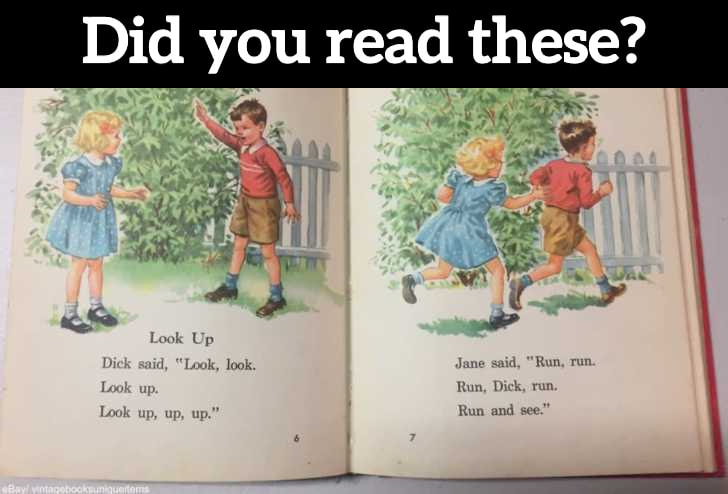
Many school age children grew up with Dick and Jane as fixtures in their young lives. The Dick and Jane books were once the most popular early readers for kids in the U.S. The publishers were criticized in years later for bland story lines and a limited range of situations that didn’t teach children lessons about morality or culture. However, the books were never intended to do that. The Dick and Jane series, which was published from 1930-1965, was instrumental in the lives of millions of school children. Despite that, there are still a few facts about the series you might not have known.
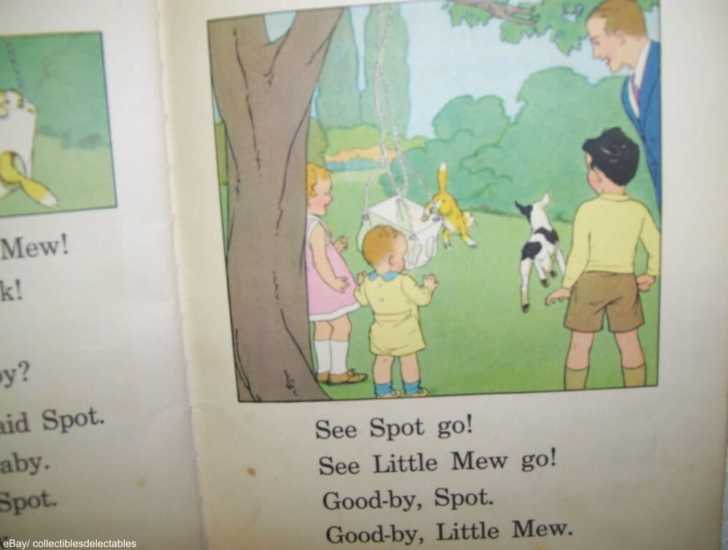
1) Spot Was Not a Dog
Spot started out as a cat, then became a dog in 1940 at which point the cat was called Puff. Baby also got a name that year: Sally.
2) Their Popularity Was Unquestioned
In the first half of the 20th century it is estimated that 4 out of 5 schools were using the Dick and Jane readers, making them the most iconic first books for many children for decades.
3) Not Too Heavy
Each book was graded for size: 1st grade = 300 words
3rd grade = 1,000 words
6th grade = 4,000 words This meant that no child would be asked to read too thick of a book.
4) A New Kind of School Book
They were seen as a radical departure from the classical texts, like the Bible or Shakespeare, which had formed the basis of elementary school readers in the 19th century. The Dick and Jane stories were simple, but filled with characters that modern children related to.
5) The Illustrations Changed a Lot
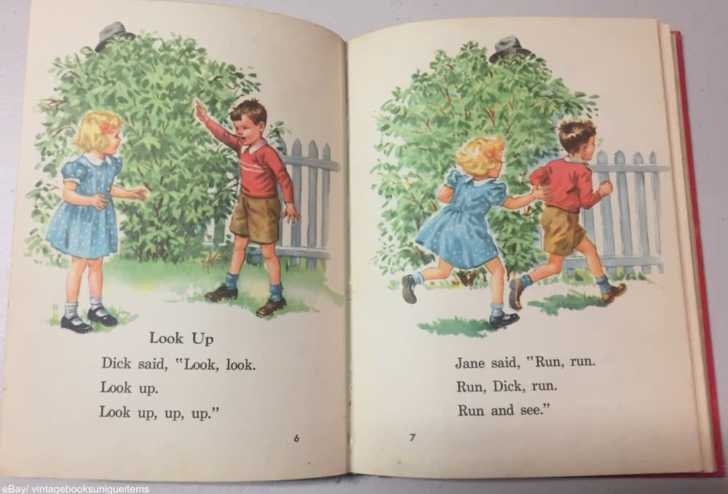
It was the same 1940 revisions that turned Spot into a dog which saw the addition of a new illustration style. These new drawings made the children plumper and more rounded – as most of us remember them today.
6) Specialized Learning
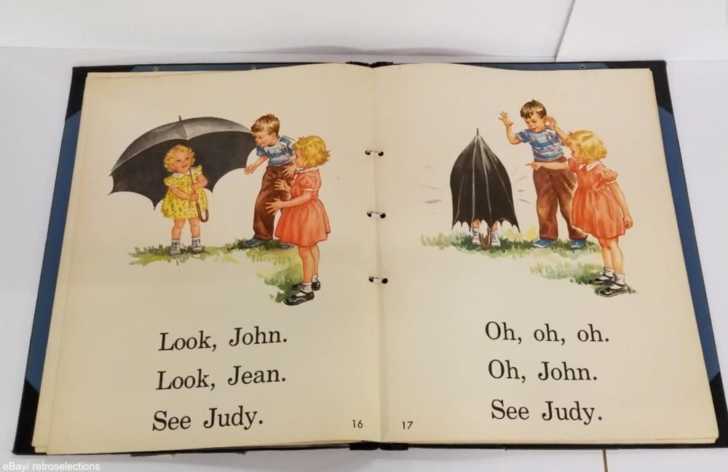
There was a special Catholic edition for parochial schools called the Cathedral series which included more Catholic-sounding names and more faith-centered situations. Jean, John, and Judy were the character names, but Spot was still Spot.
7) Winds of Change
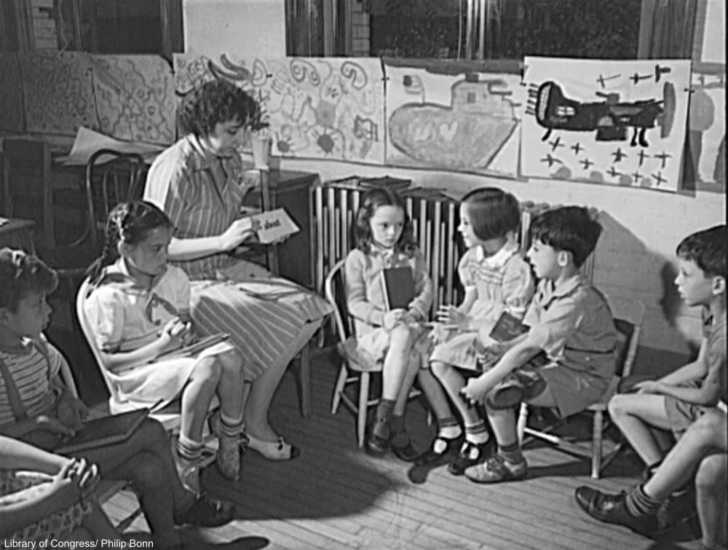
Within 10 years of The Cat in the Hat, Dick and Jane was fading. Dr. Seuss celebrated replacing it with livelier, more relatable tales. The whole-word method lost favor by the late 1960s, with schools returning to phonics, supported by read-aloud sessions and flashcards to aid recognition and comprehension.
9) The Books Went Up To High School
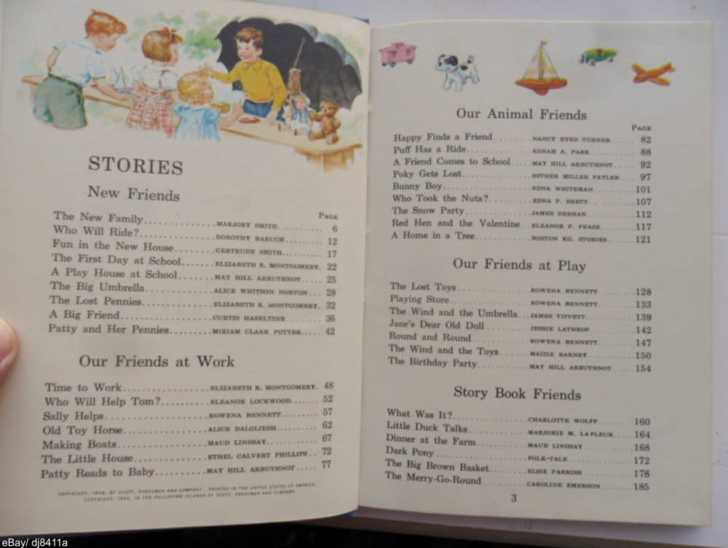
The Dick and Janebooks were made for children in grades 1 through 9, but it’s no surprise that the editions made for younger children were far more popular than the editions for older children.
