Miriam Haskell, a Russian immigrant’s daughter, rose from Indiana roots to become a leading 20th-century costume jewelry designer.
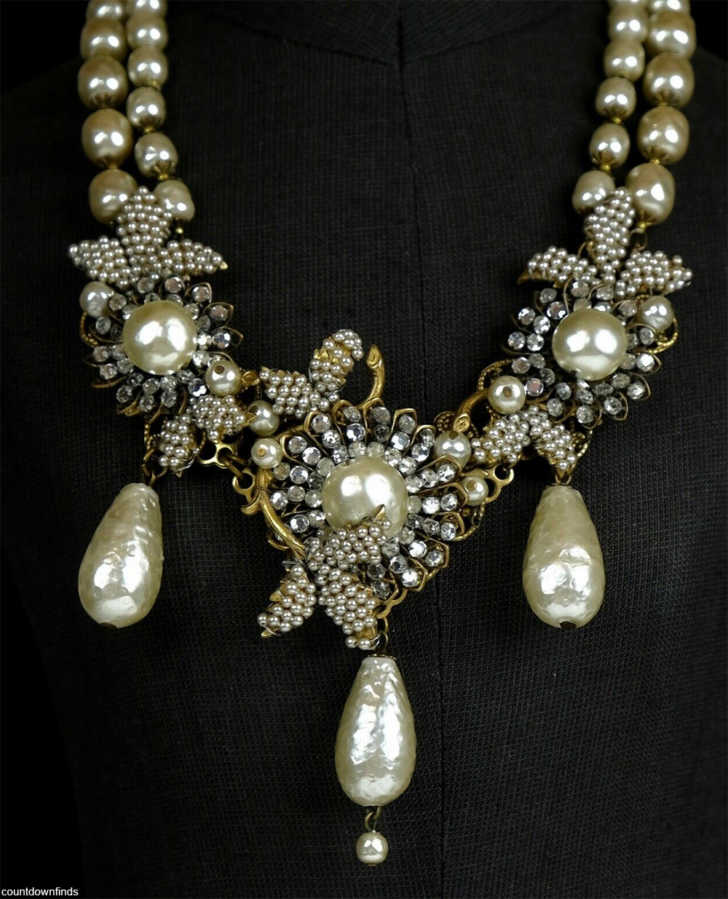
Haskell opened her first jewelry shop in the Big Apple in 1926, hot on the heels of Coco Chanel’s first line of costume jewelry from 1924. At the time the genre of costume jewelry was something of a novelty, as mass production had not yet been fully applied to creation of jewelry. It stands to reason then that if a company was going to spend the time to make something by hand -either all or in part- it better fetch a pretty penny in the shops and be made from precious materials. But, Haskell’s costume jewelry changed all that.
The glitzy Roaring Twenties and the rise of the middle class made it the perfect time to launch this new kind of jewelry. Suddenly women could look respectable and glamorous even if they couldn’t spend big bucks on diamonds (or perhaps even of they didn’t want to).
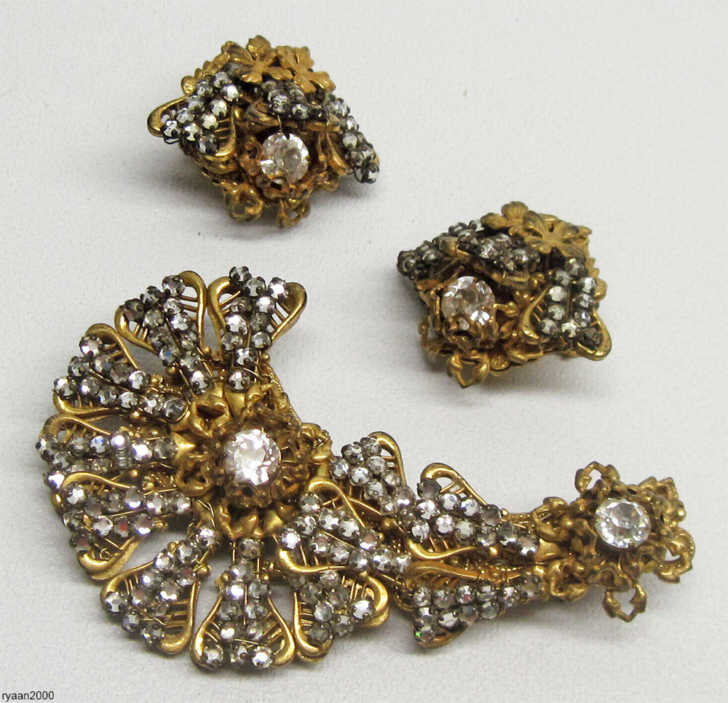
Miriam Haskell’s whimsical costume jewelry offered affordable luxury during the Great Depression. Handcrafted with faux pearls, rhinestones, and brass, her designs didn’t mimic wealth—they sparked joy. Worn by stylish women in tough times, her creations embodied the “lipstick effect,” making beauty and individuality accessible without the high cost of real gems.
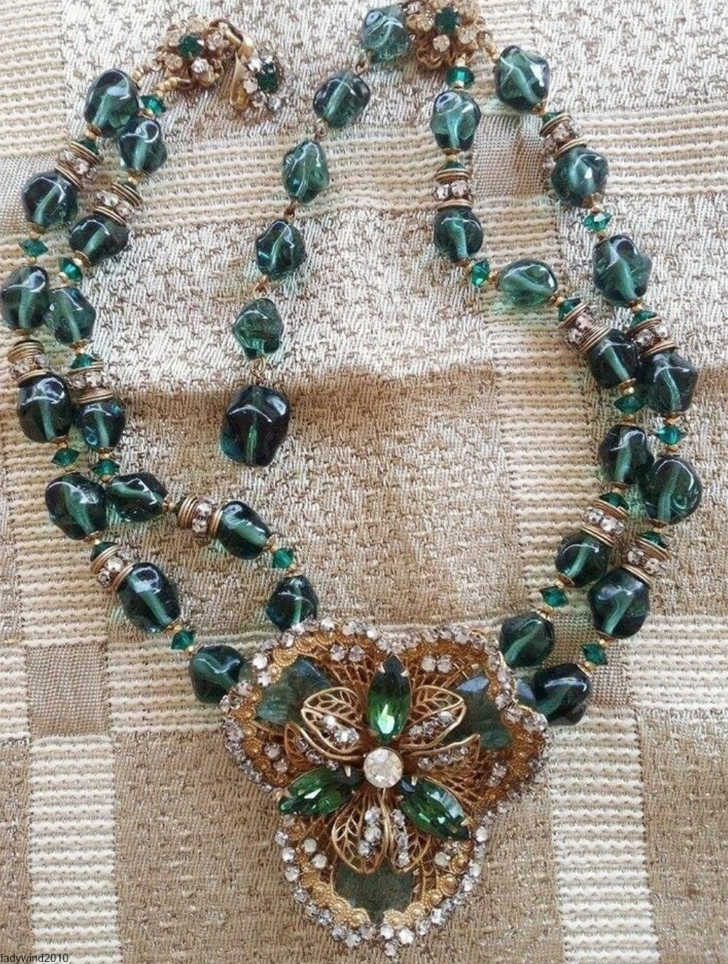
Miriam Haskell’s bold, beaded designs dazzled collectors like Joan Crawford. Signed post-1950 pieces remain prized; earlier ones often unsigned.
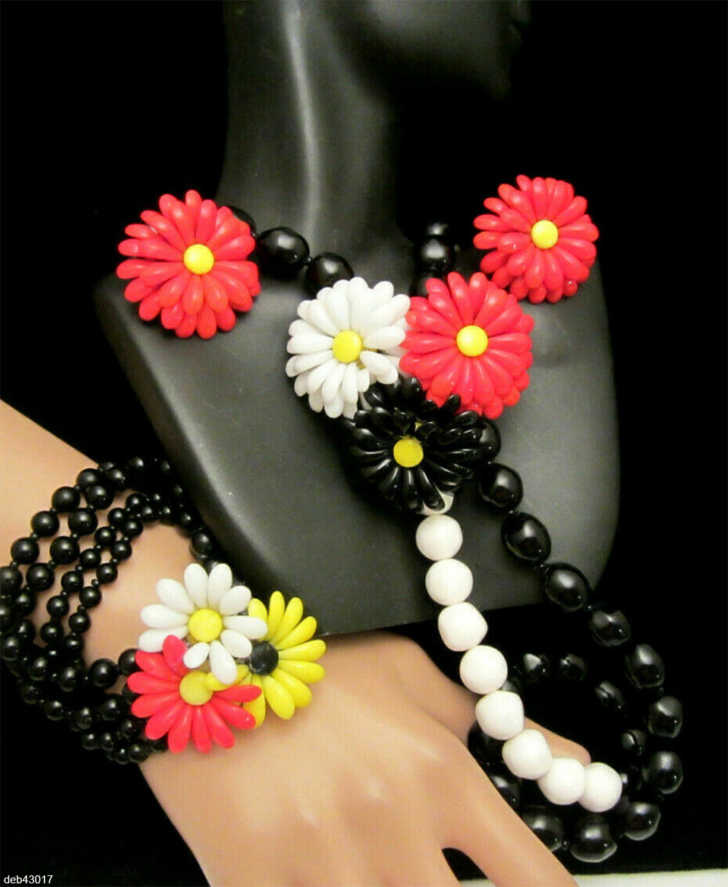
Today Miriam Haskell jewelry is some of the most collectible costume jewelry you can buy. Truly elaborate pieces can sell for more than $3,000, and even her more average designs sell for more than other costume jewelry pieces of the same vintage.
The label’s main designer from 1926-1960 was Frank Hess, who followed Haskell’s vision of fantasy and whimsy. Pieces from the 1940s and the 1950s remain the most collectible era for Miriam Haskell items. If you have a piece of Miriam Haskell jewelry you have a true piece of fashion history!
