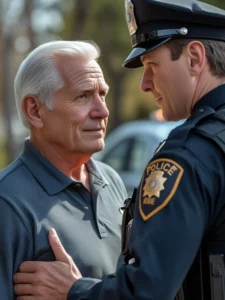
A police officer forced my 72-year-old husband to lie face-down on burning asphalt—because his exhaust was too loud.
It was 97 degrees. Harold, a decorated Vietnam veteran with arthritis, was held for 23 minutes, his face pressed to the pavement while four squad cars blocked traffic. Officer Kowalski stood over him, nudging him with his boot. “Stay down, old man,” he said.
This wasn’t enforcement. It was humiliation. My husband, who’d spent a lifetime riding with pride, was treated like a criminal.
The cop whispered something cruel—something that broke Harold more than war ever did. That’s when I knew: I had to fight back.
“Want to talk about it?” I asked.
Harold stared at the floor. “Kowalski pulled me aside. Said guys like me don’t belong on the roads. Next time, they’d find something that sticks.”
That threat broke something in my husband — a Bronze Star veteran, a lifelong rider. But I refused to let it stand.
I organized, rallied the community, and we packed the next city council meeting. Veterans spoke, the VA testified, and the officer apologized.
Harold? He rides again.
He’s not hanging it up. Not now. Not ever. Because the road still belongs to men like him. And always will
