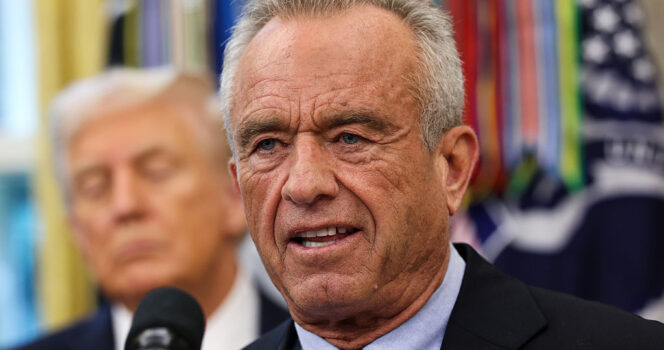
When Health Secretary Robert F. Kennedy Jr. joined a recent high-level meeting with former President Donald Trump and senior officials, few expected the discussion to erupt into national controversy. What began as a routine policy briefing quickly shifted when Kennedy revived long-disputed claims linking common medications and routine procedures to autism — remarks that immediately drew concern from advisors in the room.
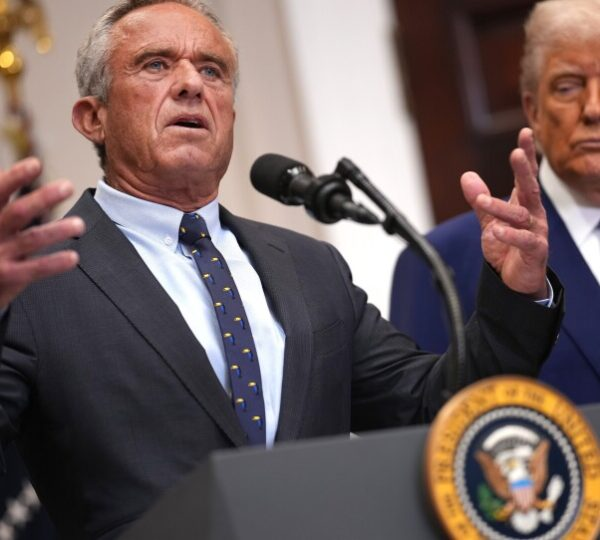
Kennedy repeated his assertion that acetaminophen, widely known as Tylenol, might contribute to autism in children, despite extensive scientific reviews finding no causal connection. He also introduced an unproven claim suggesting higher autism rates among boys circumcised in infancy, a statement that alarmed medical experts who later stressed that correlation does not equal causation.
Within hours of the comments becoming public, autism advocacy groups, medical associations, and public health researchers issued firm rebuttals. They emphasized that decades of research show no evidence linking Tylenol or circumcision to autism, and warned that spreading unsupported theories risks confusing parents and undermining trust in healthcare guidance.
For many families, the controversy was a painful reminder that autism — a complex neurological condition shaped largely by genetics — should be discussed with accuracy, responsibility, and compassion, not speculation.
