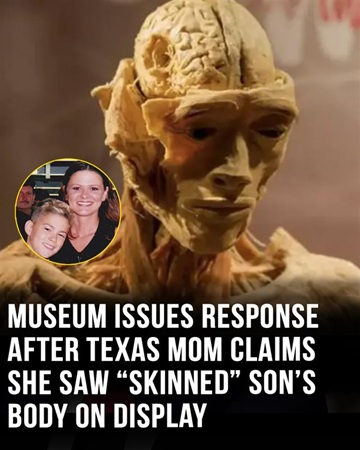
A museum in Las Vegas has firmly denied emotional allegations made by Texas mother Kim Erick, who believes the remains of her late son, Chris Todd Erick, are being displayed as part of a real-human-body exhibit. Chris died in 2012 at just 23, reportedly from an undiagnosed heart condition. His body was said to be cremated, but Kim never felt the explanation fully addressed her concerns.
Years later, while researching plastination, Kim saw a photograph of a cadaver known as “The Thinker” in the Real Bodies Exhibition and became convinced the preserved figure resembled Chris. She cited a skull fracture, tattoo placement, and body proportions as reasons for her belief, demanding DNA testing.
The museum rejected the claim, stating “The Thinker” had been on display since 2004—long before Chris’s death—and that all specimens are anonymized, legally sourced, and impossible to identify. Archived photos from the early 2000s supported this timeline, and fact-checkers labeled the claim unproven.
Still, Kim continues to seek answers. Her determination reflects a deeper issue: families deserve transparency about how human remains are handled. For her, the search is not about controversy—it is about ensuring her son’s story is complete.
