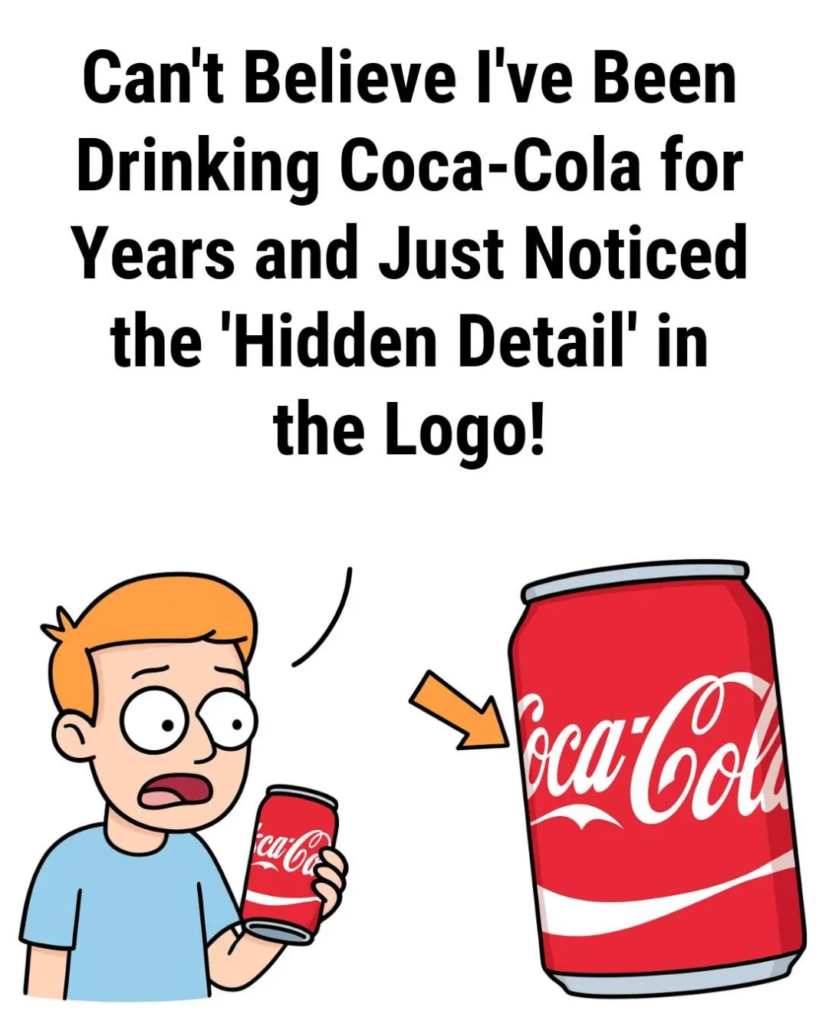
The Coca-Cola logo is one of the most recognized pieces of lettering in the world, yet many people insist they see something hidden in its curves: a friendly smile. The logo dates back to the 1880s, when bookkeeper Frank Mason Robinson created it using Spencerian script, the elegant handwriting of the era. Robinson’s goal was practical—he wanted a refined, balanced, and visually pleasing design for the new beverage. No notes or drafts suggest he intended to hide a smile; the flourish beneath the name was likely ornamental.
Yet over time, viewers began to perceive warmth in that curve. This reflects a human instinct: our brains are wired to find faces, emotions, and patterns. We see expressions in cars, animals in clouds, and intention in flickering lights. The Coca-Cola logo, repeated across bottles, billboards, and holiday displays, became part of childhood memories and cultural routines. Our minds layered positive feelings onto the design, turning decoration into a grin.
Today, the logo’s curves haven’t changed, but our perception has. The hidden smile exists not because of Robinson, but because we, the viewers, made it so.
