In a political era full of upheaval, Washington was unprepared when Donald Trump declared, “Minnesota is now under direct presidential command.” The chamber erupted—gasps, shouts, chairs scraping. Staffers scrambled, phones flashed, and chaos consumed the room.
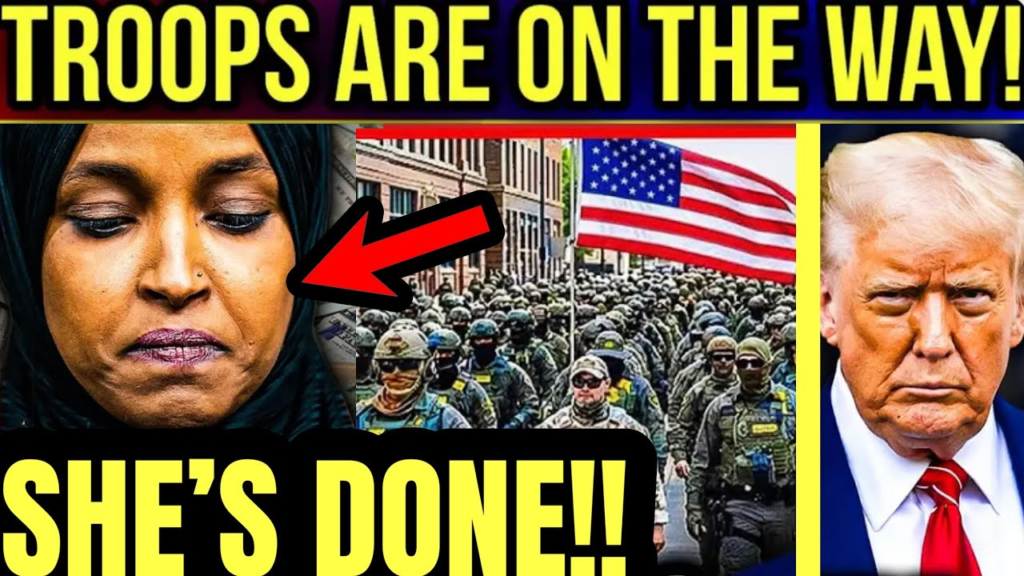
Representative Ilhan Omar’s reaction was striking. Witnesses say she staggered, gripping the edge of her desk as papers slid to the floor, whispering, “This can’t be happening.” Her knees buckled, her voice cracked, and for a moment, the emotional weight of power collided with human fragility in real time.
Trump, meanwhile, remained coldly focused. He signed the executive order with deliberate precision, handing it to aides without looking up. Cameras captured every motion. Social media exploded with clips of Omar’s visible fear and Trump’s calm, driving hashtags and nationwide discussion.
The order’s legality and symbolism were immediately debated. Minnesota, home to the largest Somali American community, became a flashpoint. Omar’s collapse humanized the political shock, transforming abstract authority into a visceral moment.
History will remember the image: a president asserting unprecedented power, a congresswoman overwhelmed, and a chamber—and a nation—witnessing the seismic clash.
