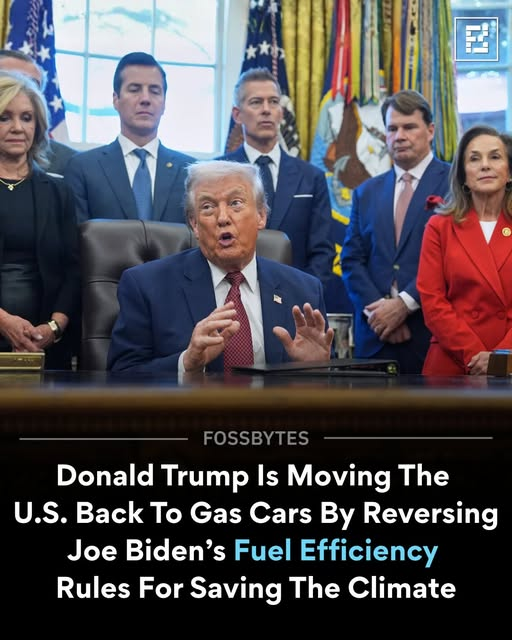
President Trump has rolled back key fuel-efficiency standards, significantly altering federal policy on vehicle emissions and dealing a blow to Biden’s climate agenda. Under the new plan, the 2031 requirement for cars and light trucks drops from 50.4 mpg, as mandated under Biden, to 34.5 mpg. This reduction eases pressure on automakers to produce and sell electric vehicles, slowing the transition to cleaner transportation.
Trump argued the rollback would save Americans roughly $109 billion and reduce the cost of a new car by about $1,000, framing the move as economically beneficial. The decision comes after previous actions eliminating EV tax credits and penalties, further dismantling elements of the former administration’s climate strategy.
Environmental groups warn that this represents a broader retreat from clean-energy goals at a time when transportation remains the largest source of U.S. emissions. Critics argue the policy shift undermines efforts to combat climate change, leaving the nation further from its emissions targets. Supporters, however, praise the move for easing financial burdens on consumers and manufacturers, highlighting the ongoing tension between environmental priorities and economic considerations in federal policy.
