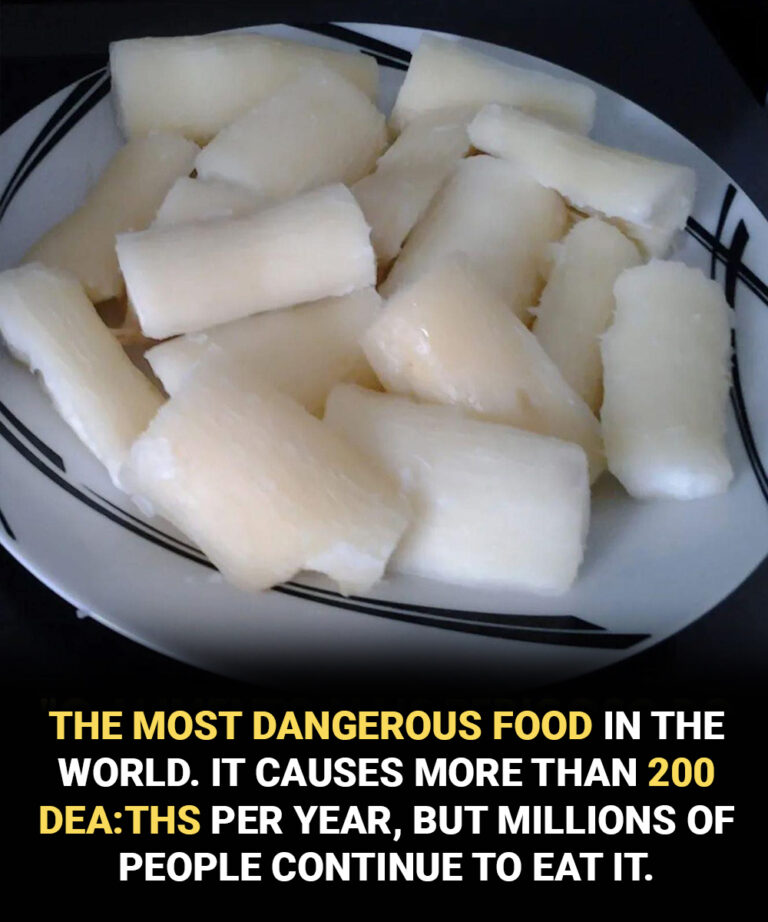
Cassava, a starchy root popular in Brazil, Africa, and Southeast Asia, is a staple in breads, cakes, porridges, and fried dishes. While safe when prepared properly, cassava can release cyanide, especially in bitter varieties that contain higher levels of cyanogenic compounds. When peeled, grated, or chewed, these compounds can form cyanide, which becomes dangerous if the root is eaten raw or undercooked.
Serious cassava poisoning usually occurs in regions facing food insecurity, fuel shortages, or drought, where traditional soaking and cooking steps are shortened. Loss of cultural knowledge about proper preparation also increases risks. In well-equipped kitchens, including in the U.S., cassava products—like tapioca, frozen roots, or preprocessed flour—are generally safe when cooked as directed.
Repeated consumption of inadequately processed cassava in protein-poor diets can lead to konzo, a rare neurological disease. Affected individuals may experience sudden leg weakness, difficulty walking, and long-term movement issues.
Understanding the proper handling of cassava—soaking, fermenting, and thorough cooking—ensures it can be safely enjoyed. While dangerous in extreme conditions, cassava remains a nutritious and versatile food when prepared correctly.
