Late one evening, Donald Trump delivered remarks from Mar-a-Lago that sent shockwaves far beyond the United States. He claimed Venezuelan President Nicolás Maduro had been secretly captured and placed in U.S. custody, asserting that American forces now effectively controlled Venezuela and its oil infrastructure. The announcement came without prior notice to Congress and was framed as a completed, bloodless operation, with Trump saying no U.S. service members were lost. He spoke of bringing “peace, liberty, and justice” to Venezuelans and hinted that Cuba could be “next.”
If true, the claims would represent a dramatic break from long-standing U.S. foreign policy norms. Detaining a sitting head of state and asserting control over another nation’s resources would raise serious constitutional, legal, and diplomatic concerns. Reports accompanying the speech described airstrikes on Venezuelan military and communications sites, though independent verification was limited.
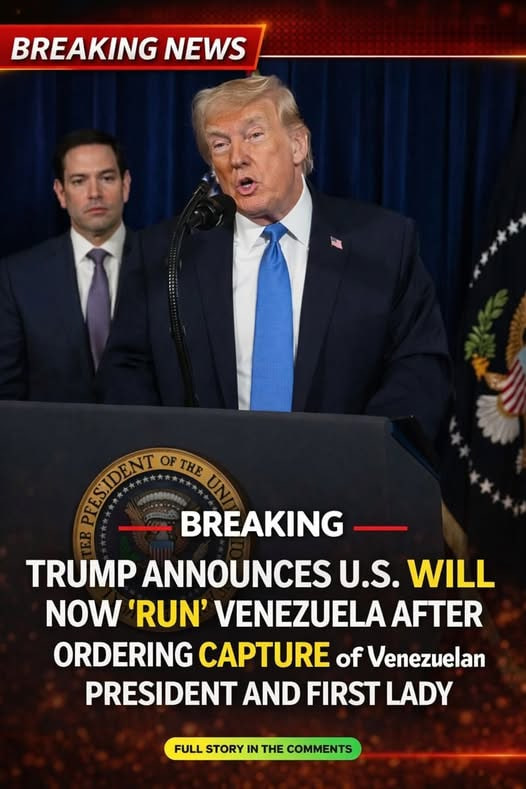
Venezuelan state media dismissed the claims as misinformation, while international observers urged caution. In Washington, lawmakers demanded clarity on legal authority and oversight. For the region, the moment signaled not resolution, but the possible beginning of a volatile and uncertain chapter.
