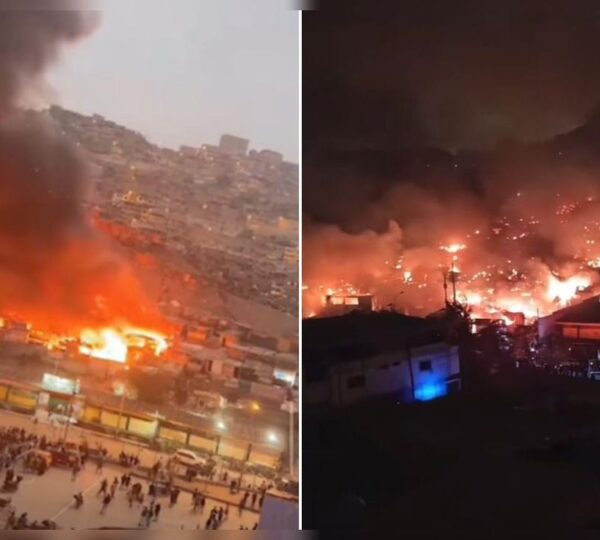
In a scene of panic and chaos,
families scrambled through narrow alleys. Some grabbed what little they could salvage: a quilt, a few clothes, a cherished photo.
Others carried children wrapped in blankets, guided the elderly down steep, slippery paths with trembling arms, rarely stopping to look back.
By the time firefighters and volunteer neighbors arrived, the fire had already leapt across dozens — eventually over one hundred — homes.
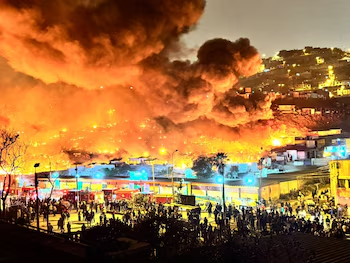
The mountainside was bathed in an ominous red glow, the air thick with ash, burnt wood, and smoke.
Screams of despair and shock filled the air; people called out for missing relatives, for friends, for help. For many, it was their home — their entire life — disintegrating in smoke and flame before their eyes.
Discovery of Pyrotechnics — a Deadly Complication
The danger escalated further when the blaze reached what appeared to be a clandestine pyrotechnics workshop hidden among the makeshift houses.
Neighbors reported muffled explosions, small but sharp — each blast scattering sparks, igniting nearby structures, and making firefighting efforts far more hazardous.
Investigators now treat that workshop as a probable point of origin.
But in a neighborhood built out of desperation rather than formal planning, it will be difficult to know for sure how the inferno began — and who, if anyone, was responsible.
Shelter, Aid — But Also Delays
In the immediate aftermath, at least 15 units of the fire brigade battled the flames, while additional emergency teams from the army and civil defense were deployed.
Temporary shelters were set up: 30 tents on a nearby sports field, and 22 more in the local stadium.
Families have been evacuated there — but many remain living on the streets, in tents, or crowded together.
