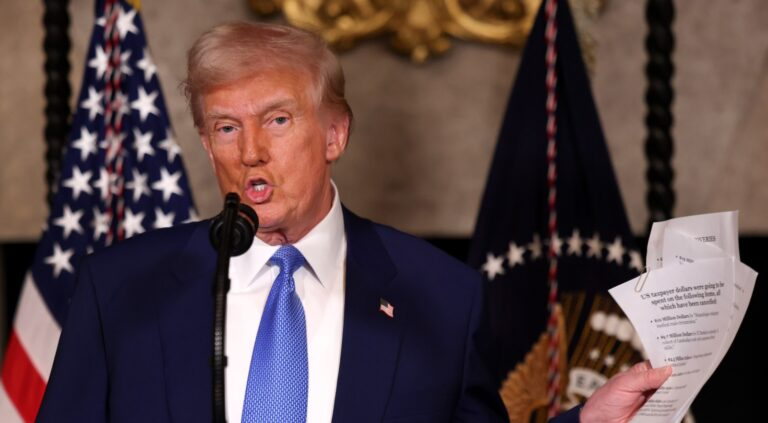
President Donald Trump has proposed issuing $2,000 stimulus-style rebate checks to low- and middle-income Americans, funded primarily through revenue generated by his sweeping import tariffs. The payments would likely be distributed in mid-to-late 2026, though the plan faces significant hurdles.
Key challenges include an upcoming U.S. Supreme Court case that could determine the legality of the tariffs, uncertainty over whether tariff revenue would be sufficient to fund such large payouts, and the need for congressional approval. While Trump has publicly promoted the idea since July, several Republican lawmakers remain skeptical. Ohio Senator Bernie Moreno has argued that tariff revenue should instead be used to reduce the nation’s nearly $38 trillion debt.
Administration officials have offered mixed signals. Treasury Secretary Scott Bessent suggested limiting eligibility to households earning under $100,000, while Commerce Secretary Howard Lutnick supports the rebates. White House economic adviser Kevin Hassett recently acknowledged the plan’s future depends on Congress.
The Tax Foundation estimates the checks could cost between $279.8 billion and $606.8 billion, exceeding projected tariff revenue. Still, Trump maintains the payments remain likely.
